Preparing for your Basic Life Support (BLS) assessment in New York requires more than memorizing CPR steps. You need to understand how to respond to cardiac arrest, provide effective chest compressions, use an AED, and work with other rescuers during an emergency. Practicing these skills and reviewing key concepts can help you feel more prepared for your BLS Provider course assessment.
American Heart Association BLS practice test in New York includes 25 multiple-choice questions on adult and pediatric CPR, AED use, rescue breathing, choking emergencies, and team dynamics. Each question has four answer options, the correct answer, and an explanation of why it is correct.
Use these questions to test your knowledge, review important BLS concepts, and identify topics that may need further study before your assessment.
Note: These are original practice questions based on core BLS concepts and AHA guidelines. They are not official AHA exam questions.
25 BLS Questions and Answers With Explanations
Section 1: Adult CPR and High-Quality CPR
Question 1. What is the recommended chest compression rate for an adult in cardiac arrest?
A. 60 to 80 compressions per minute
B. 80 to 100 compressions per minute
C. 100 to 120 compressions per minute
D. 120 to 140 compressions per minute
Correct answer: C. 100 to 120 compressions per minute
Explanation: The recommended compression rate for adult CPR is 100 to 120 compressions per minute. This rate supports blood flow to the brain and other vital organs. Compressing too slowly may provide insufficient circulation, while compressing too quickly can affect compression depth and chest recoil.
Question 2. How deep should chest compressions be during adult CPR?
A. At least 1 inch (2.5 cm)
B. At least 2 inches (5 cm), while avoiding depths greater than 2.4 inches (6 cm)
C. Exactly 3 inches (7.6 cm)
D. Approximately 1.5 inches (3.8 cm)
Correct answer: B. At least 2 inches (5 cm), while avoiding depths greater than 2.4 inches (6 cm)
Explanation: Chest compressions help circulate blood to the brain and other vital organs during cardiac arrest. If compressions are too shallow, the heart may not pump enough blood to support these organs. If compressions are too deep, they can increase the risk of injury.
Question 3. Why is complete chest recoil important during CPR?
A. It prevents the need for rescue breaths.
B. It allows the heart to refill with blood between compressions.
C. It eliminates the need for an AED.
D. It reduces the compression rate.
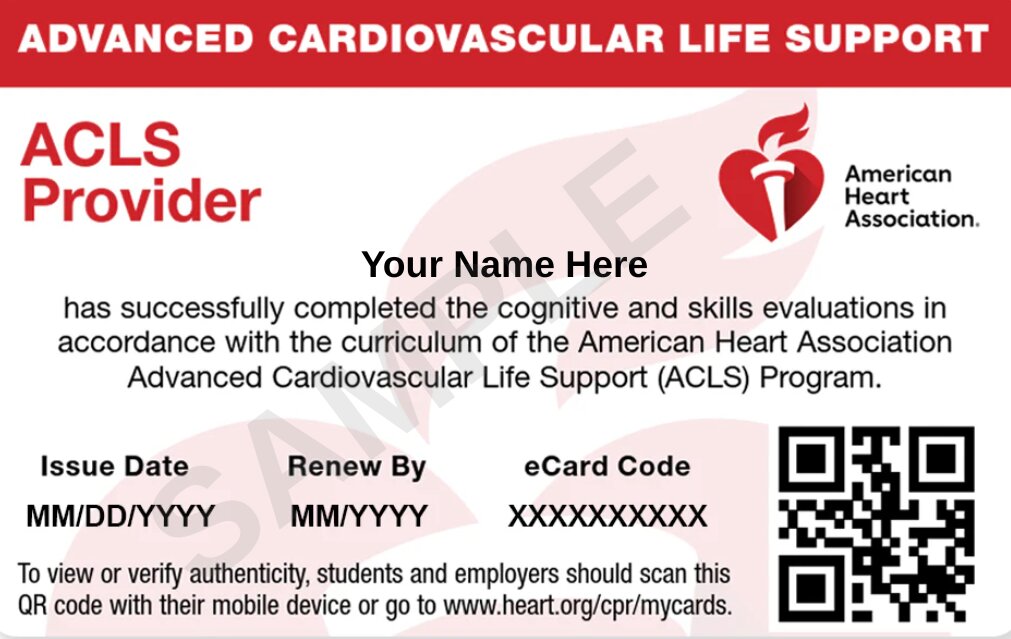
Correct answer: B. It allows the heart to refill with blood between compressions.
Explanation: The chest should return fully to its normal position after each compression. Leaning on the chest between compressions can interfere with blood returning to the heart and reduce the effectiveness of CPR.
Question 4. What is the compression-to-ventilation ratio for a single rescuer performing adult CPR without an advanced airway?
A. 15 compressions to 1 breath
B. 15 compressions to 2 breaths
C. 30 compressions to 2 breaths
D. 50 compressions to 5 breaths
Correct answer: C. 30 compressions to 2 breaths
Explanation: A single rescuer performing conventional adult CPR gives 30 chest compressions followed by 2 rescue breaths. Each breath should last approximately one second and produce visible chest rise.
Question 5. How can rescuers minimize interruptions during chest compressions?
A. Stop after every 10 compressions to reassess the patient.
B. Pause frequently to check for breathing.
C. Limit pauses to necessary interventions and resume compressions promptly.
D. Stop CPR whenever another rescuer arrives.
Correct answer: C. Limit pauses to necessary interventions and resume compressions promptly.
Explanation: Interruptions reduce the time blood circulates through chest compressions. Rescuers should coordinate AED use, keep necessary pauses short, and resume compressions promptly after interventions.
Section 2: Recognizing Cardiac Arrest and Using an AED
Question 6. A healthcare provider finds an adult unresponsive and not breathing normally. What should the provider do?
A. Wait for the patient to wake up.
B. Activate the emergency response system, arrange for an AED, and check breathing and pulse promptly.
C. Give the patient water.
D. Place the patient in a seated position.
Correct answer: B. Activate the emergency response system, arrange for an AED, and check breathing and pulse promptly.
Explanation: An unresponsive adult who is not breathing normally may be in cardiac arrest. A healthcare provider should activate the emergency response system and check breathing and pulse simultaneously for no more than 10 seconds. If no definite pulse is felt, CPR should begin.
Question 7. How long should a healthcare provider take to check an adult’s pulse?
A. No more than 5 seconds
B. No more than 10 seconds
C. Approximately 20 seconds
D. At least 30 seconds
Correct answer: B. No more than 10 seconds
Explanation: A pulse check should take no more than 10 seconds. If the provider cannot definitely feel a pulse and the adult is unresponsive with absent or abnormal breathing, CPR should begin without further delay.
Question 8. When should an AED be used during cardiac arrest?
A. Only after 10 minutes of CPR
B. Only when a physician arrives
C. As soon as it is available, following its prompts
D. Only after five minutes of rescue breathing
Correct answer: C. As soon as it is available, following its prompts
Explanation: Early defibrillation can help restore a normal heart rhythm when cardiac arrest is caused by ventricular fibrillation or pulseless ventricular tachycardia. Begin CPR immediately while someone gets the AED. Continue CPR until the AED is ready to analyze the heart rhythm, and keep pauses in chest compressions as short as possible.
Note: If you’re unfamiliar with AED operation, follow our step-by-step guide to learn how to use an AED.
Question 9. What should rescuers do while an AED analyzes the patient’s heart rhythm?
A. Continue touching the patient.
B. Ensure nobody is touching the patient.
C. Remove the AED pads.
D. Give rescue breaths during the analysis.
Correct answer: B. Ensure nobody is touching the patient.
Explanation: Everyone must stay clear of the patient during rhythm analysis. Movement or contact can interfere with accurate analysis. Rescuers should follow the AED instructions and resume CPR promptly when directed.
Question 10. What should a rescuer do immediately after an AED delivers a shock?
A. Check the pulse for 30 seconds.
B. Remove the AED pads.
C. Resume CPR, beginning with chest compressions.
D. Wait to see whether the patient wakes up.
Correct answer: C. Resume CPR, beginning with chest compressions.
Explanation: CPR should resume immediately after a shock unless the patient shows clear signs of life or the AED directs otherwise. Delaying compressions for an extended pulse check can reduce blood flow to vital organs.
Section 3: Pediatric and Infant Basic Life Support
Question 11. What is the recommended compression depth for a child during CPR?
A. About one-sixth of the chest depth
B. At least one-third of the chest’s front-to-back diameter, approximately 2 inches (5 cm)
C. At least 3 inches (7.6 cm)
D. The same depth as an adult regardless of the child’s size
Correct answer: B. At least one-third of the chest’s front-to-back diameter, approximately 2 inches (5 cm)
Explanation: During CPR, chest compressions help the heart pump blood to the brain and other vital organs. For a child, push the chest down at least 2 inches (5 cm) during each compression. This depth helps circulate enough blood while reducing the risk of injury from excessive pressure.
Question 12. What is the recommended compression depth for an infant during CPR?
A. About 0.5 inch (1.3 cm)
B. About 1 inch (2.5 cm)
C. At least one third of the chest’s front-to-back diameter, approximately 1.5 inches (4 cm)
D. At least 2.5 inches (6.4 cm)
Correct answer: C. At least one third of the chest’s front-to-back diameter, approximately 1.5 inches (4 cm)
Explanation: Infant chest compressions should reach approximately one-third of the chest’s front-to-back diameter. For an average infant, this is about 1.5 inches. Appropriate depth helps circulate blood during resuscitation.
Question 13. What is the compression-to-ventilation ratio for two healthcare providers performing CPR on a child without an advanced airway?
A. 30:1
B. 30:2
C. 15:2
D. 5:1
Correct answer: C. 15:2
Explanation: Two healthcare providers performing conventional CPR on a child use 15 compressions followed by 2 breaths. A single rescuer performing pediatric CPR without an advanced airway generally uses a 30:2 ratio.
Question 14. Which technique is recommended for delivering chest compressions to an infant?
A. Pressing on the abdomen
B. Using two fingers only in all circumstances
C. Using the heel of one hand or the two-thumb encircling hands technique
D. Compressing the upper ribs
Correct answer: C. Using the heel of one hand or the two-thumb encircling hands technique
Explanation: Current AHA pediatric guidance recommends using the heel of one hand or the two-thumb encircling hands technique for infant compressions. Current guidelines no longer recommend using two fingers to perform chest compressions on an infant.
Question 15. An infant is unresponsive and is not breathing normally. What should a rescuer do?
A. Wait five minutes before intervening.
B. Activate emergency assistance and begin the appropriate infant resuscitation sequence.
C. Give the infant something to drink.
D. Shake the infant vigorously.
Correct answer: B. Activate emergency assistance and begin the appropriate infant resuscitation sequence.
Explanation: An unresponsive infant who is not breathing normally needs immediate assessment and resuscitation. The rescuer should activate emergency assistance and provide CPR according to the applicable infant BLS algorithm. The order of CPR steps may change depending on how many rescuers are available.
Section 4: Rescue Breathing and Choking Emergencies
Question 16. How long should each rescue breath last during CPR?
A. Approximately half a second
B. Approximately one second, enough to produce visible chest rise
C. Approximately three seconds
D. Approximately five seconds
Correct answer: B. Approximately one second, enough to produce visible chest rise
Explanation: Give each rescue breath over 1 second, using just enough air to make the chest visibly rise. Excessive ventilation can cause complications and interfere with effective resuscitation.
Question 17. What should a rescuer do when a responsive adult has severe choking?
A. Immediately begin chest compressions.
B. Encourage the person to drink water.
C. Alternate five back blows with five abdominal thrusts.
D. Perform a blind finger sweep.
Correct answer: C. Alternate five back blows with five abdominal thrusts.
Explanation: Current AHA guidance recommends cycles of five back blows followed by five abdominal thrusts for a responsive adult with severe foreign body airway obstruction. Continue until the object is expelled or the person becomes unresponsive.
Question 18. What is the recommended treatment for a responsive infant with severe choking?
A. Five abdominal thrusts followed by five chest compressions
B. Five back blows alternating with five chest thrusts
C. Abdominal thrusts until the object comes out
D. Blind finger sweeps until the airway is clear
Correct answer: B. Five back blows alternating with five chest thrusts
Explanation: For an infant with severe choking, repeat five back blows and five chest thrusts. Abdominal thrusts are not recommended for infants because they may cause injury.
Question 19. What should a rescuer do if a choking adult becomes unresponsive?
A. Continue abdominal thrusts while the person lies down.
B. Give the person water.
C. Carefully lower the person to a firm surface, activate emergency assistance, and begin CPR with chest compressions.
D. Attempt to remove the object using a blind finger sweep.
Correct answer: C. Carefully lower the person to a firm surface, activate emergency assistance, and begin CPR with chest compressions.
Explanation: If a person with severe choking becomes unresponsive, begin CPR with chest compressions. When opening the airway to give breaths, look for a visible object and remove it if seen. Never perform a blind finger sweep, as this could push the obstruction deeper.
Question 20. What should a rescuer do if the chest does not rise during a rescue breath?
A. Deliver several forceful breaths quickly.
B. Reopen the airway and try another breath, checking for a visible obstruction when appropriate.
C. Stop CPR permanently.
D. Apply abdominal thrusts to every unresponsive patient.
Correct answer: B. Reopen the airway and try another breath, checking for a visible obstruction when appropriate.
Explanation: If the chest does not rise, the airway may not be open adequately, or an obstruction may be present. Reposition the airway and attempt another breath. If the patient is in cardiac arrest, continue CPR and avoid unnecessary delays.
Section 5: Team Dynamics, BLS Skills, and Certification
Question 21. Why should rescuers switch the person performing chest compressions approximately every two minutes when another trained rescuer is available?
A. To allow the first rescuer to leave permanently.
B. To prevent all interruptions in CPR.
C. To reduce rescuer fatigue and maintain high-quality compressions.
D. To make rescue breaths unnecessary.
Correct answer: C. To reduce rescuer fatigue and maintain high-quality compressions.
Explanation: Chest compressions can become less effective as the rescuer becomes fatigued. Switching compressors approximately every two minutes helps maintain compression quality. Switch rescuers during a brief pause, such as when the AED analyzes the heart rhythm, to minimize interruptions in chest compressions.
Question 22. Which set best represents three critical roles in a coordinated BLS resuscitation team?
A. Compressor, airway provider, and monitor/defibrillator/CPR coach
B. Receptionist, observer, and patient transporter
C. Medication provider, record keeper, and receptionist only
D. Family member, security guard, and patient transporter
Correct answer: A. Compressor, airway provider, and monitor/defibrillator/CPR coach
Explanation: These roles support the essential tasks of CPR, ventilation, and defibrillation. Team members must communicate clearly, coordinate their actions, and follow assigned responsibilities. A CPR coach or team leader may also support performance and coordination.
Note: To understand how the compressor, airway provider, and monitor/defibrillator/CPR coach work together, read our blog on the 3 Critical BLS Roles.
Question 23. What is the primary purpose of an effective CPR coach or team leader?
A. Perform all resuscitation tasks alone.
B. Coordinate the team, communicate clearly, and monitor CPR quality.
C. Delay CPR until all team members arrive.
D. Stop compressions to provide continuous instructions.
Correct answer: B. Coordinate the team, communicate clearly, and monitor CPR quality.
Explanation: Effective leadership supports clear communication, appropriate task assignment, and timely interventions. A CPR coach can monitor compression rate, depth, recoil, and interruptions while helping the team maintain high-quality CPR.
Question 24. What does an AHA BLS Provider course teach participants?
A. Adult CPR only, without AED training
B. Basic first aid only
C. High-quality CPR for adults, children, and infants, ventilation, AED use, choking relief, and team-based resuscitation skills
D. Advanced cardiac medication administration only
Correct answer: C. High-quality CPR for adults, children, and infants, ventilation, AED use, choking relief, and team-based resuscitation skills
Explanation: The AHA BLS Provider course covers essential life support skills for healthcare professionals and other people who need BLS competency. Topics include CPR, ventilation, AED use, choking relief, and effective teamwork during resuscitation.
Question 25. How long is an AHA BLS Provider course completion eCard generally valid?
A. Six months
B. One year
C. Two years
D. Five years
Correct answer: C. Two years
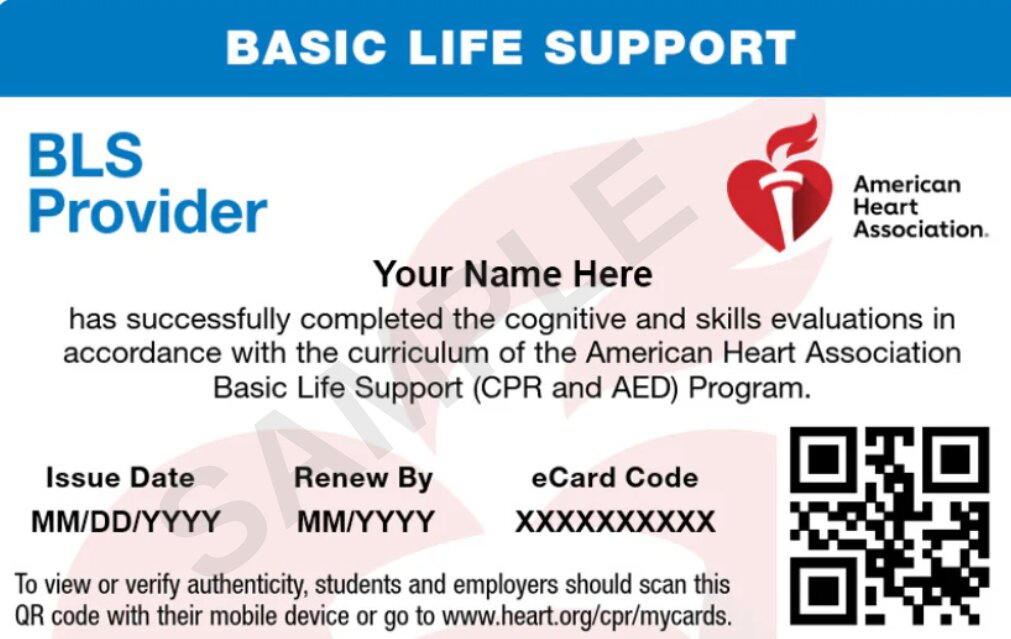
Explanation: An AHA BLS Provider course completion eCard is generally valid for two years. Students should check their eCard and employer requirements to confirm the applicable expiration date and complete renewal training on time.
If you need BLS certification for work, personal preparedness, or a clinical or non-healthcare role, you can enroll in an AHA BLS course with New York CPR Classes.
BLS Practice Test Score Guide
Use your score to identify topics that need additional review. This guide is for self-assessment and does not represent an official AHA passing score.
| Correct answers | Score | Suggested next step |
| 23 to 25 | 92% to 100% | Review missed questions and reinforce your skills. |
| 20 to 22 | 80% to 88% | Revisit weaker topics and practice again. |
| 15 to 19 | 60% to 76% | Review CPR techniques, AED use, and pediatric BLS. |
| 0 to 14 | Below 60% | Study the fundamentals before retaking the practice test. |
How to Prepare for the AHA BLS Exam
Reviewing practice questions can help you prepare for the AHA BLS exam, but you also need to understand the correct techniques and demonstrate your skills during the BLS Provider course assessment.
- Review Current AHA Guidelines: Study CPR rate and depth, chest recoil, ventilation, AED use, and choking relief.
- Practice Adult, Child, and Infant CPR: Review compression techniques, hand placement, and compression-to-ventilation ratios.
- Review AED Procedures: Learn pad placement, safety precautions, and when to resume CPR after a shock.
- Understand Team-Based Resuscitation: Review rescuer roles, communication, and coordination.
- Complete Hands-On Skills Practice: Practice CPR and AED use on a manikin and correct your technique.
Get AHA BLS Certified with New York CPR Classes
Practice questions help you review key concepts for the AHA BLS exam, but you also need to apply that knowledge during an emergency. Hands-on practice helps you develop the skills needed to perform effective CPR, use an AED, and work with other rescuers.
New York CPR Classes offers AHA BLS, ACLS, and PALS courses through a flexible blended learning format. Complete the required online coursework and hands-on skills assessment to earn your AHA certification and receive your Provider eCard the same day.
Frequently Asked Questions
Is this an official American Heart Association BLS practice test?
No. These are original educational practice questions based on core BLS concepts and AHA guidance. They are not official AHA examination questions and do not guarantee success on the actual exam.
How many questions are on the AHA BLS exam?
The AHA BLS exam contains 25 multiple-choice questions.
Can I pass the BLS exam by studying practice questions alone?
Practice questions help you review the knowledge portion, but they do not replace required skills practice and evaluation. You should also demonstrate correct CPR technique, effective ventilation, AED use, and other required BLS skills.
How often do I need to renew my AHA BLS certification?
AHA BLS certification is valid for two years and must be renewed before it expires.
Where can I find official AHA BLS study materials?
Visit the official American Heart Association website for course information, current guidelines, and BLS training resources.
- AHA BLS Course Options
- AHA CPR and ECC Guidelines