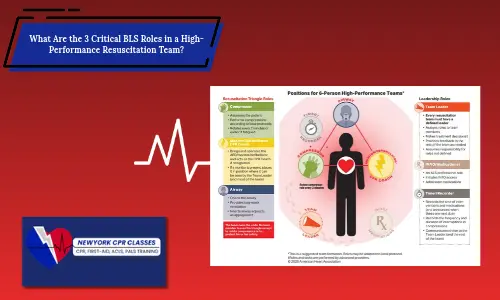
A high-performance BLS team divides CPR tasks among team members so that key aspects of the response can be managed together. Dividing the work among team members allows the team to maintain chest compressions, manage the airway, and monitor the patient while coordinating the overall response.
The resuscitation triangle provides a structure for organizing the three core tasks during a cardiac arrest response. When more team members are available, they can take on additional roles that support the core BLS response, such as team leadership, medication administration, and documentation.
This guide explains the three roles within the resuscitation triangle, how they work together during BLS, the additional roles in a larger team, and how this team structure connects with ACLS.
What Is the Resuscitation Triangle in BLS?
The resuscitation triangle is a BLS team structure that organizes three core roles during a cardiac arrest response. Each role focuses on a different part of CPR, while the three team members work together to maintain effective resuscitation.
| BLS Role | Main Focus |
| Compressor | Performs chest compressions and maintains CPR quality. |
| Airway Provider | Maintains the airway and provides ventilation. |
| Monitor/Defibrillator/CPR Coach | Monitors the heart rhythm, operates the AED or defibrillator, and provides feedback on CPR quality when serving as the CPR coach. |
What Does the Compressor Do?
The compressor performs chest compressions and focuses on maintaining high-quality CPR throughout the resuscitation. This includes maintaining the appropriate compression rate and depth, allowing full chest recoil, and minimizing interruptions.
Communication with the other team members is also important when a change is needed. When fatigue affects the quality of chest compressions, another trained team member should take over. Coordinating the role switch helps keep interruptions in chest compressions as short as possible.
The compressor works closely with the other team members during resuscitation. The airway provider coordinates ventilation with chest compressions, while the monitor/defibrillator or CPR coach communicates rhythm findings and provides feedback on CPR performance.
What Does the Airway Provider Do?
The airway provider maintains an open airway and provides ventilation during CPR. This includes positioning the airway, applying the mask correctly, maintaining an effective mask seal, and delivering breaths as appropriate for the situation.
Coordination with the compressor helps ensure that ventilation does not interfere with effective chest compressions. The airway provider also monitors for airway or mask seal problems and communicates any issues to the team.
During a two-person BLS response using a bag-mask, one rescuer may perform compressions while the other manages the airway and ventilation.
What Does the Monitor/Defibrillator/CPR Coach Do?
The monitor/defibrillator role focuses on the patient’s cardiac rhythm and the equipment used to assess and treat it. The team member prepares and operates the AED or defibrillator, follows the device prompts, and coordinates rhythm analysis and shock delivery when indicated.
When this position includes the CPR coach function, the team member also observes CPR performance. The CPR coach can monitor factors such as compression quality, interruptions, and ventilation and provide specific feedback to the compressor and airway provider.
This gives the team an additional set of eyes on CPR quality while the other responders remain focused on their primary tasks.
How Do the 3 BLS Roles Work Together?
The three roles work simultaneously rather than completing one task before moving to the next. The compressor, airway provider, and monitor/defibrillator/CPR coach communicate throughout the resuscitation to coordinate changes in the patient’s condition, CPR quality, and treatment needs while minimizing interruptions.
For example, the monitor/defibrillator role communicates when rhythm analysis is needed, allowing the compressor and airway provider to prepare for the rhythm check. When serving as the CPR coach, this team member provides feedback on CPR performance while the other team members continue their assigned tasks.
What is the Goal of a high-performance BLS Resuscitation Team?
The main goal of a high-performance BLS resuscitation team is to provide effective CPR through clear role assignment, coordinated actions, and continuous communication. Team members work together to maintain CPR quality, minimize unnecessary interruptions, and respond efficiently to changes during the resuscitation.
Key goals include:
- Maintain high-quality CPR: Ensure chest compressions remain effective throughout the resuscitation.
- Minimize interruptions: Keep pauses in chest compressions as short as possible.
- Coordinate critical actions: Work together during ventilation, rhythm analysis, and defibrillation.
- Communicate effectively: Share important information and communicate when an action or role change is needed.
- Maintain clear responsibilities: Ensure each team member understands their assigned role and responsibilities.
- Adapt to the situation: Adjust roles and responsibilities based on the number of available responders and the resources at the scene.
When Should BLS Team Members Switch Roles?
Team members may switch positions when needed to maintain effective performance. The compressor generally changes with another trained responder about every two minutes, or sooner if fatigue is affecting compression quality.
The incoming compressor should be ready before the switch occurs. Team members should communicate the change clearly and coordinate it with other CPR activities to minimize interruptions.
Other roles may also be reassigned when team members become fatigued, leave the response, or additional responders arrive.
What If Fewer Rescuers Are Available?
The full resuscitation triangle requires three people, but emergencies do not always involve three trained responders. When fewer people are available, one responder may need to manage multiple responsibilities.
The priority is to maintain the essential functions of CPR while adapting responsibilities to the number of available rescuers, their training, and the equipment present.
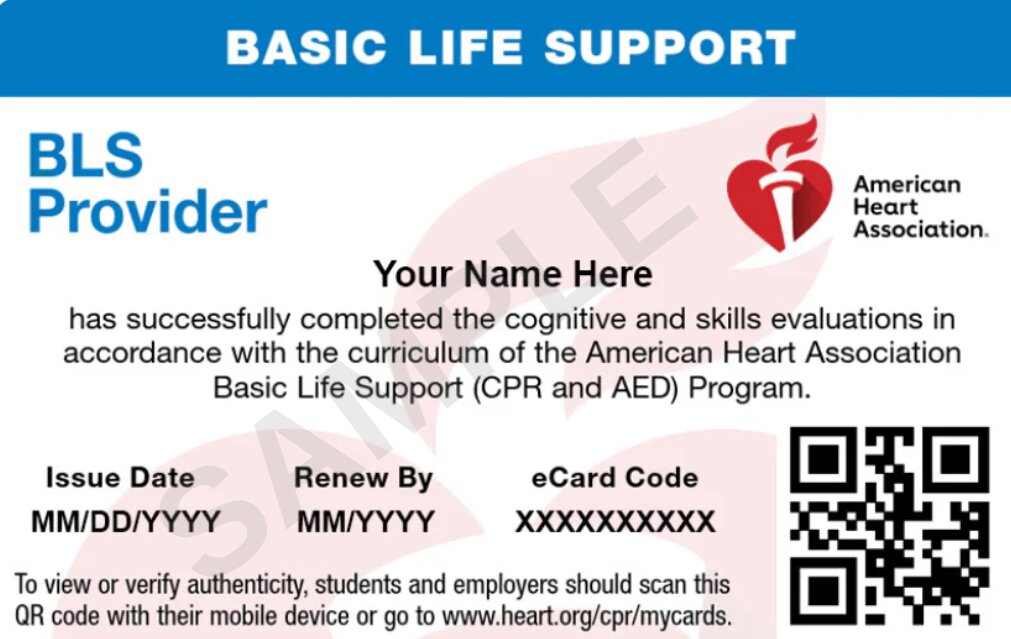
As more trained responders arrive, the team can assign each responsibility to a separate team member. Clear role assignment helps prevent important tasks from being overlooked. BLS classes can help responders develop the CPR, AED, and teamwork skills needed to perform these roles effectively.
What Are the Other Roles in a High-Performance Resuscitation Team?
A larger resuscitation team can include additional positions beyond the three core BLS roles. These positions support the team by handling leadership, documentation, medications, and other tasks.
1. Role of the Team Leader
The team leader coordinates the resuscitation, assigns roles, and communicates the plan to the team. This role also monitors the overall response and helps team members coordinate their actions.
2. Role of the IV/IO/Medications Provider
The IV/IO/medications provider manages vascular access and medications during the resuscitation. This may include establishing IV or IO access and preparing or administering medications according to the applicable protocol.
3. Role of the Timer/Recorder
The Timer/Recorder tracks important events and records key information during the resuscitation. This includes documenting interventions, medications, CPR cycles, and other important events while keeping the team informed about timing.
These positions become especially important as the response expands into a larger high-performance or ACLS team. They support the three core BLS functions rather than replacing them.
How Do BLS Team Roles Fit Into ACLS?
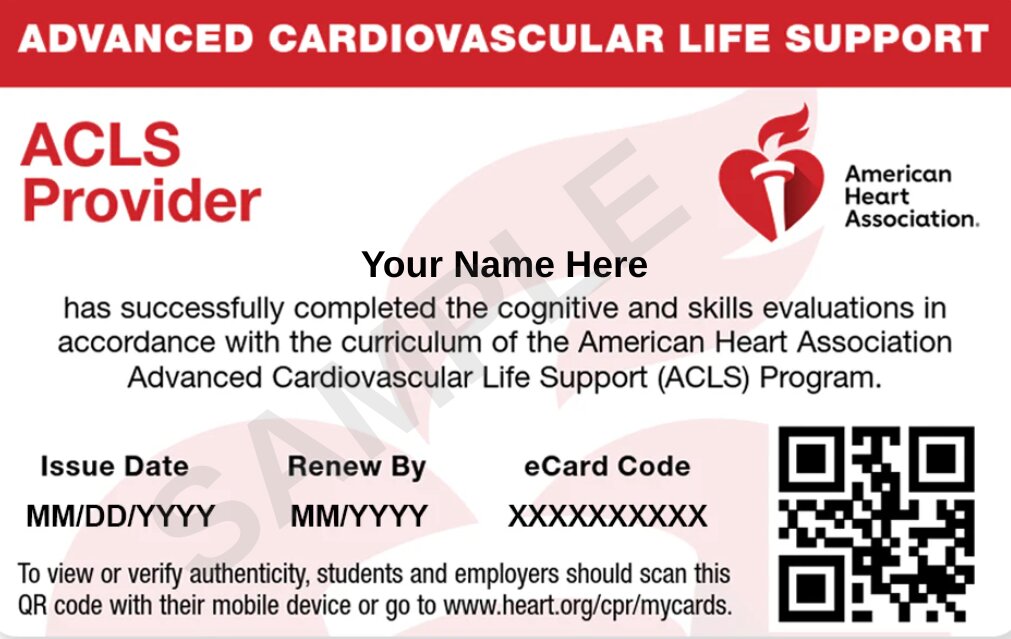
The three BLS roles form part of the foundation of a larger resuscitation response. During ACLS, additional team members may manage medications, vascular access, advanced airway interventions, rhythm interpretation, and team leadership.
The exact assignment of responsibilities depends on the number of responders, their training, and the clinical setting. Clear role assignment and effective communication help the team coordinate BLS and advanced interventions during cardiac arrest. ACLS classes build on these BLS skills by covering advanced resuscitation care and team response.
Prepare for High-Performance BLS Response
High-performance BLS resuscitation relies on clear roles, effective communication, and coordinated actions during cardiac arrest. Understanding how team members work together can help maintain high-quality CPR and support an organized response.
New York CPR Classes offers flexible BLS options to fit different schedules, with classes available in the morning, during the day, and in the evening. You can complete the online course before attending the hands-on skills session. After completing the required components, you can receive same-day certification that is nationally recognized in the United States.
FAQs About BLS Resuscitation Team Roles
Which resuscitation team member opens the airway and maintains a proper mask seal during ventilation?
The airway provider maintains an open airway and ensures a proper mask seal during ventilation.
Who operates the AED during a resuscitation?
The monitor/defibrillator role prepares and operates the AED or defibrillator, follows the device prompts, and coordinates rhythm analysis and shock delivery when indicated.
What does the CPR coach do?
The CPR coach observes CPR performance and provides feedback to help the compressor and airway provider maintain effective CPR.
Are the team leader and timer part of the three BLS triangle roles?
No. The team leader and timer/recorder are additional roles used in a larger resuscitation team. The three core triangle positions are the compressor, airway provider, and monitor/defibrillator/CPR coach.
Can one person perform more than one BLS role?
Yes. When fewer responders are available, the team may need to combine roles. Each responder should take on the tasks they are trained and equipped to perform.