
Sudden cardiac arrest can happen without warning and requires immediate action. When the heart suddenly stops pumping effectively, the body no longer receives enough blood and oxygen, making immediate emergency care essential for survival.
Early defibrillation is an important part of treating certain cardiac arrest rhythms. Providing a shock at the right time can help interrupt a dangerous rhythm before the cardiac arrest continues for longer.
This guide explains why early defibrillation is important, how it works with CPR, which heart rhythms require a shock, and its role in the Chain of Survival.
Why Does Defibrillation Need to Happen Quickly During Cardiac Arrest?
During cardiac arrest, ventricular fibrillation or pulseless ventricular tachycardia can stop the heart from pumping blood effectively. Without circulation, the brain and other vital organs receive less oxygen, making rapid treatment essential.
The 2025 American Heart Association guidelines state that defibrillation is most successful when delivered as soon as possible after ventricular fibrillation or pulseless ventricular tachycardia begins. The longer defibrillation is delayed, the lower the chance of survival, so rescuers should work to reduce the time from recognizing cardiac arrest to delivering the first appropriate shock.
CPR should continue while another rescuer retrieves the defibrillator and prepares it for use. CPR helps maintain blood flow to the brain and other organs until defibrillation can be delivered when a shockable rhythm is present.
How Does Early Defibrillation Help During Cardiac Arrest?
Defibrillation can restore a normal heart rhythm when cardiac arrest is caused by ventricular fibrillation or pulseless ventricular tachycardia.
The effect of the shock can be understood through three key steps:
- Stops the shockable rhythm: The electrical shock interrupts ventricular fibrillation or pulseless ventricular tachycardia.
- Allows organized activity to return: Once the abnormal rhythm is terminated, the heart may regain a coordinated electrical rhythm.
- Supports the return of circulation: If the heart regains an effective rhythm, blood flow may return. CPR and continued resuscitation care may still be needed to support circulation.
Which Cardiac Arrest Rhythms Can Be Treated With Defibrillation?
Defibrillation is used for shockable cardiac arrest rhythms, primarily ventricular fibrillation and pulseless ventricular tachycardia.
Ventricular Fibrillation
Ventricular fibrillation, or VF, causes the heart’s lower chambers to quiver chaotically instead of contracting normally. As a result, the heart cannot pump blood effectively. A defibrillation shock can terminate VF and allow an organized rhythm to return.
Pulseless Ventricular Tachycardia
Pulseless ventricular tachycardia, or pVT, is a rapid ventricular rhythm that does not produce effective circulation. When pVT is present during cardiac arrest, defibrillation is used to terminate the shockable rhythm.
Note: Defibrillation does not treat nonshockable rhythms such as asystole and pulseless electrical activity (PEA). CPR and other appropriate resuscitation measures remain necessary.
How Do CPR and Early Defibrillation Work Together?
CPR and defibrillation have different roles during cardiac arrest. CPR provides chest compressions that help circulate blood to the brain and other vital organs while the heart is not pumping effectively.
Defibrillation treats the electrical rhythm when VF or pVT is present. CPR should continue while the AED or defibrillator is retrieved and prepared. Keep interruptions as short as possible during rhythm analysis and shock delivery.
CPR and early defibrillation work together as key parts of cardiac arrest treatment. Enrolling in an AHA Heartsaver CPR AED class can help participants learn CPR and understand how defibrillation is used during a cardiac emergency.
How Does an AED Support Early Defibrillation?
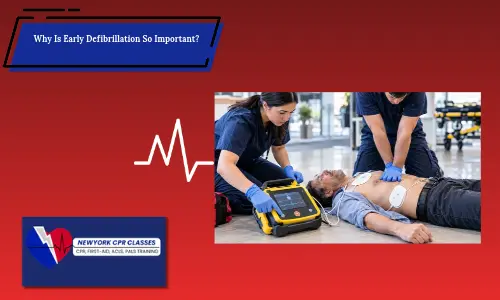
An automated external defibrillator (AED) makes early defibrillation possible outside medical facilities. Once the AED is turned on and the pads are placed on the person’s chest, the AED analyzes the heart rhythm and determines whether a shock is needed.
If the AED detects a shockable rhythm, it provides instructions to deliver the shock. If the rhythm is not shockable, the AED will not advise a shock and will direct the rescuer to continue CPR as instructed.
An AED that is easy to locate and access can reduce delays in analyzing the heart rhythm and starting treatment after cardiac arrest. Learning how to use an AED helps rescuers respond quickly and follow the device’s instructions during an emergency.
What Happens When Defibrillation Is Delayed?
When a shockable rhythm continues without defibrillation, the heart cannot produce effective circulation. As the cardiac arrest continues, the chances of successful defibrillation and survival can decrease.
The effects of delaying treatment include:
- The shockable rhythm can become harder to terminate: Ventricular fibrillation can continue and may become less responsive to defibrillation as cardiac arrest is prolonged.
- The risk of organ injury increases: Without effective circulation, the brain and other vital organs receive inadequate oxygen. Prolonged oxygen deprivation can cause serious and potentially permanent injury.
- The chance of survival decreases: Delaying the first appropriate shock is associated with a lower likelihood of survival when ventricular fibrillation or pulseless ventricular tachycardia is present.
- The rhythm may progress to a nonshockable rhythm: A prolonged cardiac arrest can deteriorate from a shockable rhythm to asystole, which cannot be treated with defibrillation.
How Does Early Defibrillation Fit Into the Chain of Survival?
Early defibrillation is one part of a coordinated response to cardiac arrest. Each link in the Chain of Survival supports the next step in resuscitation and recovery.
The six links include:
- Early recognition and activation: Recognize cardiac arrest and activate the emergency response system as quickly as possible.
- Early CPR: Begin high-quality CPR to help maintain blood flow to the brain and other vital organs while further treatment is arranged.
- Rapid defibrillation: Use an AED or defibrillator promptly when a shockable rhythm such as ventricular fibrillation or pulseless ventricular tachycardia is present.
- Advanced resuscitation: Emergency medical personnel and other healthcare professionals provide additional resuscitation measures as appropriate.
- Post-cardiac arrest care: After circulation returns, continued medical care focuses on stabilizing the patient and addressing the effects and cause of cardiac arrest.
- Recovery: Ongoing treatment, rehabilitation, follow-up care, and support may be needed after the initial resuscitation.
The 2025 American Heart Association guidelines identify early high-quality CPR and prompt defibrillation as key interventions associated with improved outcomes in adult cardiac arrest. AHA BLS and ACLS courses teach the Chain of Survival and explain how each step helps improve the response to cardiac arrest.
Strengthen Your Emergency Response Skills
Learning CPR and defibrillation skills can prepare you to respond during a cardiac emergency. These skills help you recognize cardiac arrest and begin an appropriate response. Knowing how CPR and defibrillation work together may help you take action that can save a life.
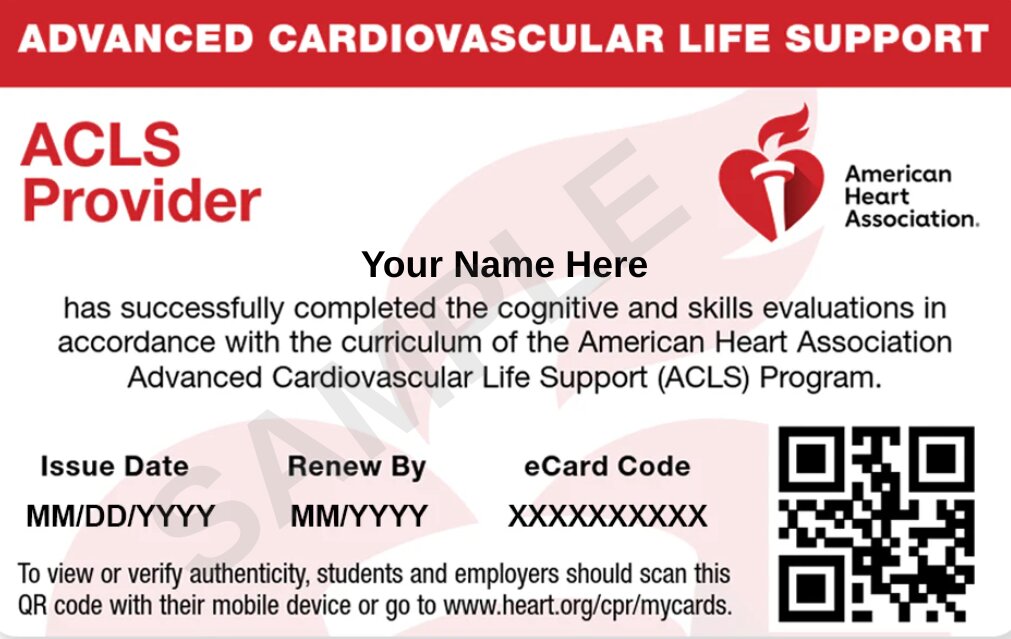
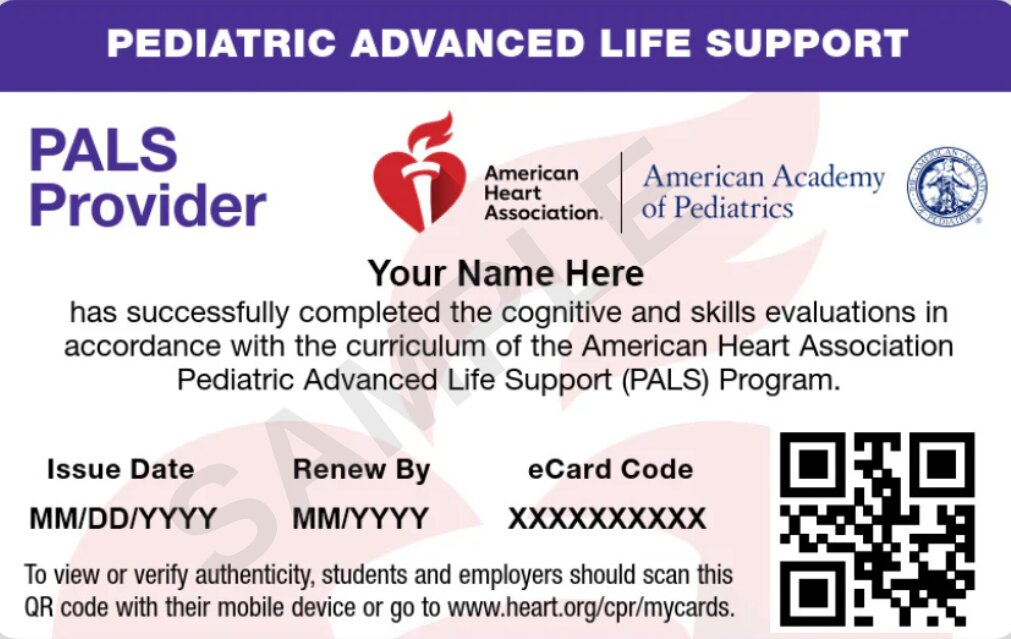
New York CPR Classes offers AHA BLS, ACLS, and PALS courses with flexible learning options. You can complete your online coursework from anywhere and then book a slot for the hands-on skills test to complete the required practical component. We provide your certification on the same day after you complete the required course components. The certification remains valid for two years and is recognized throughout the United States.
FAQs About Early Defibrillation
Can defibrillation restart a heart that has completely stopped?
No. Defibrillation does not restart a heart that has completely stopped in asystole. Defibrillation treats shockable rhythms such as ventricular fibrillation and pulseless ventricular tachycardia, while asystole requires CPR and other resuscitation measures.
Can an AED shock someone who does not need a shock?
An AED analyzes the person’s heart rhythm before advising a shock. If a shockable rhythm is not detected, the AED will not advise a shock and will instruct the rescuer to continue CPR.
Does CPR stop when an AED arrives?
CPR should continue while another rescuer gets the AED and prepares it for use. Stop chest compressions only when the AED needs to check the heart rhythm or deliver a shock, then resume CPR as soon as possible.
What happens if the first defibrillation shock does not work?
Resuscitation continues with CPR and further rhythm assessment. Additional defibrillation and other resuscitation measures may be needed when ventricular fibrillation or pulseless ventricular tachycardia continues.
Can an untrained person use an AED?
Yes. An AED provides clear step-by-step instructions for using the device during cardiac arrest. It analyzes the person’s heart rhythm and determines whether a shock is needed, allowing a bystander to follow the prompts while emergency help is on the way.
Why should CPR continue after a defibrillation shock?
A successful shock terminates the shockable rhythm, but it does not necessarily produce an immediately effective pumping rhythm. CPR may therefore be needed after the shock while the resuscitation team continues assessing and treating the patient.
Is early defibrillation needed for every cardiac arrest?
No. Early defibrillation is specifically important when the cardiac arrest involves a shockable rhythm such as VF or pVT. An AED determines whether a shock is appropriate by analyzing the person’s rhythm.
What is the benefit of early CPR and early defibrillation when an adult, child, or infant is in cardiac arrest?
Early CPR helps maintain blood flow to the brain and other vital organs, while defibrillation can treat a shockable rhythm when one is present. The basic principles apply across age groups, although CPR techniques, pad selection, and defibrillator settings may vary for adults, children, and infants.
Which intervention occurs in the “early defibrillation” step of the Chain of Survival?
The early defibrillation step involves applying an AED or defibrillator, analyzing the heart rhythm, and delivering a shock when a shockable rhythm such as ventricular fibrillation or pulseless ventricular tachycardia is detected.
What is the most important reason for applying an AED as quickly as possible?
The main reason is to allow rapid rhythm analysis and defibrillation when a shockable rhythm is present. Earlier access to an AED can reduce the time between cardiac arrest recognition and appropriate shock delivery.
Why is defibrillation important in BLS?
Defibrillation is an important part of BLS when cardiac arrest involves a shockable rhythm. Along with early CPR, prompt defibrillation helps provide immediate treatment while additional emergency care is being arranged.