
Cardiac arrest requires a rapid, coordinated response that moves from recognizing the emergency to providing treatment and supporting recovery. These actions must occur in the right sequence, with every step contributing to the overall resuscitation process.
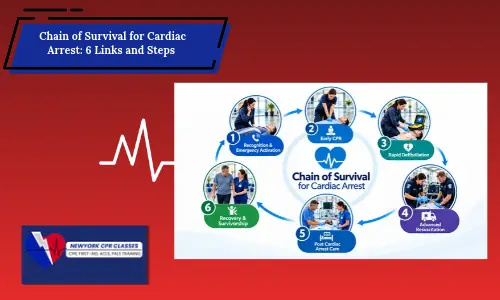
The Chain of Survival connects each stage of care, showing how early actions lead into advanced treatment, post-cardiac arrest care, and recovery. This guide explains the six links of the Chain of Survival, what happens at each step, and how they work together during cardiac arrest.
What Is the Chain of Survival?
The Chain of Survival is a framework for organizing the critical actions involved in cardiac arrest care. Each link represents a stage in the response, starting with recognition of cardiac arrest and continuing through resuscitation, medical treatment, and recovery.
The early links can involve bystanders, trained rescuers, and emergency responders. Later links involve EMS and healthcare professionals who provide advanced treatment and post-cardiac arrest care. Recovery extends the process beyond the immediate emergency and hospital stay.
What Are the 6 Links in the Updated Chain of Survival?
The six links in the 2025 Chain of Survival are:
- Recognition and Emergency Activation
- Early CPR
- Rapid defibrillation
- Advanced resuscitation
- Post-cardiac arrest care
- Recovery and Survivorship
The 2025 American Heart Association Guidelines updated the Chain of Survival to use one framework for adult and pediatric cardiac arrest in both in-hospital and out-of-hospital settings. The specific interventions within each link can vary according to the patient’s age, the cause of cardiac arrest, and the setting.
1. Recognition and Emergency Activation
The first link is recognition of cardiac arrest and activation of the emergency response system. Prompt recognition of cardiac arrest allows the emergency response system to be activated and resuscitation to begin without delay.
In an out-of-hospital cardiac arrest, a bystander may recognize that a person is unresponsive and not breathing normally, activate the emergency response system, and begin CPR. This first response starts the sequence of care that leads to the remaining links.
2. Early CPR
The second link is early CPR with an emphasis on chest compressions. CPR helps maintain circulation during cardiac arrest while an AED and additional medical assistance are being obtained.
High-quality CPR includes effective chest compressions and appropriate ventilation. The 2025 AHA Guidelines emphasize both compressions and breaths, with the appropriate approach depending on the patient and circumstances.
3. Rapid Defibrillation
The third link is rapid defibrillation. An AED or manual defibrillator can analyze the heart rhythm and determine whether a shock is appropriate.
When a shockable rhythm such as ventricular fibrillation or pulseless ventricular tachycardia is present, defibrillation can help restore an effective heart rhythm. Early access to a defibrillator is therefore an important part of cardiac arrest response.
If you are unfamiliar with AED operation, read our step-by-step guide on how to use an AED safely and effectively.
4. Advanced Resuscitation
The fourth link is advanced resuscitation by Emergency Medical Services and other healthcare providers. This stage builds on the initial CPR and defibrillation response with advanced medical treatment.
Depending on the situation, advanced resuscitation may include medications, advanced airway management, vascular access, and other interventions provided by trained healthcare professionals. Some patients may also receive extracorporeal CPR in systems where this treatment is available and appropriate.
5. Post-Cardiac Arrest Care
The fifth link is post-cardiac arrest care. This stage begins after the initial resuscitation has restored circulation and focuses on ongoing medical management.
Care can include critical care treatment, management of the underlying cause of cardiac arrest, temperature control, neurological assessment, and other interventions appropriate to the patient’s condition. The 2025 guidelines also include specific recommendations for supporting recovery after cardiac arrest.
6. Recovery and Survivorship
The sixth link is recovery and survivorship. Recovery includes additional treatment, observation, rehabilitation, and psychological support.
The effects of cardiac arrest can continue after hospital discharge. Survivors may need assessment and support for physical, cognitive, neurological, emotional, or cardiopulmonary problems. Family members and caregivers may also need support during the recovery process.
How Do the 6 Links Work Together?
The six links form a connected sequence:
Recognition and emergency activation → Early CPR → Rapid defibrillation → Advanced resuscitation → Post-cardiac arrest care → Recovery and survivorship
The first link starts the emergency response. CPR provides immediate resuscitation while additional help is being mobilized. Defibrillation treats a shockable rhythm when present, while advanced resuscitation provides additional medical interventions. After circulation is restored, post-cardiac arrest care and recovery continue the patient’s care.
The AHA describes the Chain of Survival as a progression of critical actions, with opportunities to improve each link and support survival and recovery after cardiac arrest.
Hands-on practice can help providers develop the skills needed to perform the six links of the Chain of Survival correctly. AHA BLS training provides an opportunity to practice these skills in a structured setting and prepare for cardiac emergencies.
Why Is the Chain of Survival Important?
Cardiac arrest stops the heart from pumping blood to the brain and other vital organs. Without timely resuscitation, reduced blood flow can cause brain injury and other complications, making rapid recognition, CPR, and defibrillation important parts of the response.
Key reasons the Chain of Survival is important include:
- Supports early action: Helps responders recognize cardiac arrest and begin the appropriate response promptly.
- Helps maintain circulation: Early CPR helps provide blood flow to the brain and other vital organs until further treatment is available.
- Reduces delays in defibrillation: Rapid defibrillation can improve outcomes when a shockable cardiac rhythm is present.
- Continues beyond resuscitation: Includes post-cardiac arrest care and recovery after circulation is restored.
How Does the Chain of Survival Relate to BLS, ACLS, and PALS?
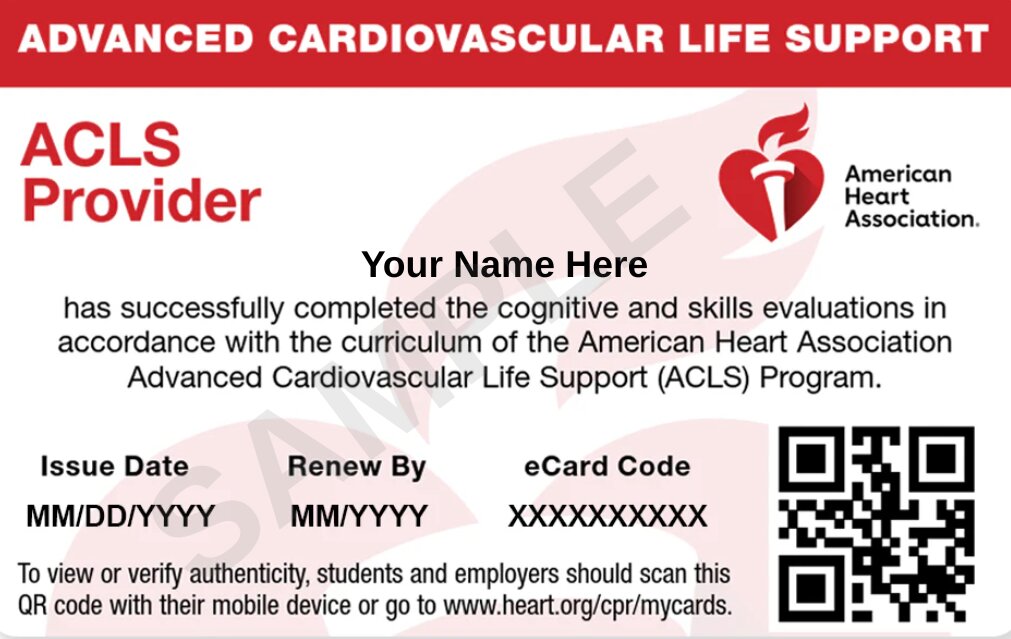
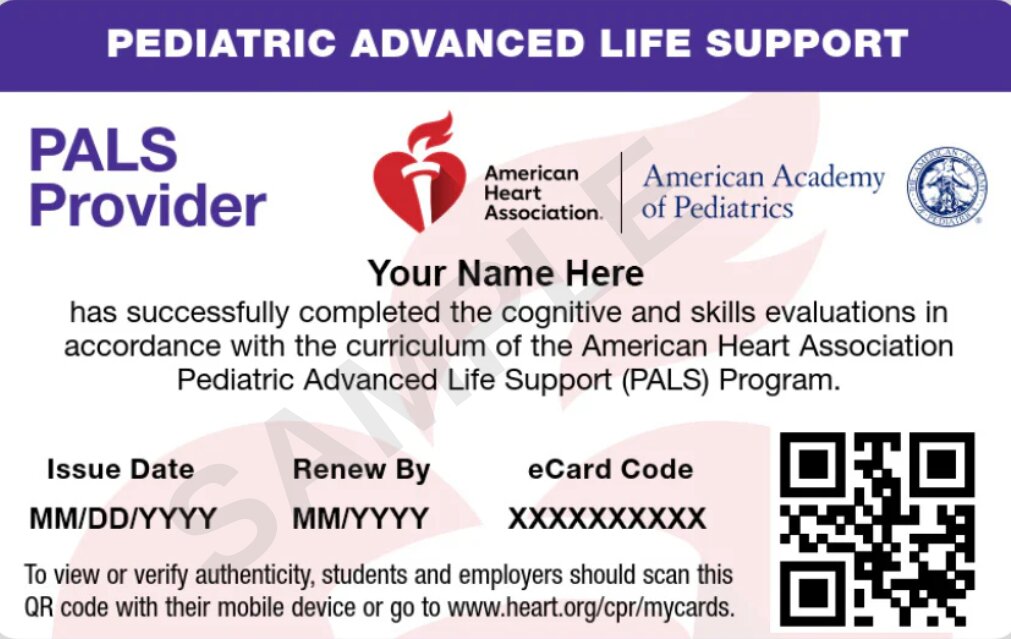
BLS, ACLS, and PALS training cover different skills and interventions within cardiac arrest care. The table below shows how each training level relates to the six links of the Chain of Survival.
| Chain of Survival Link | BLS | ACLS | PALS |
| Recognition and emergency activation | Recognize cardiac arrest and activate the emergency response system | Recognize cardiac arrest and clinical deterioration in adults | Recognize pediatric emergencies and cardiac arrest |
| High-quality CPR | Perform high-quality CPR | Perform high-quality CPR with advanced interventions | Perform age- and size-appropriate CPR |
| Defibrillation | Use an AED when appropriate | Use manual defibrillation and other electrical therapies | Use pediatric-appropriate defibrillation and electrical therapies |
| Advanced resuscitation | Not included in basic BLS skills | Advanced airway, vascular access, medications, and other resuscitation interventions | Advanced airway, vascular access, medications, and pediatric resuscitation interventions |
| Post-cardiac arrest care | Not typically covered as advanced post-arrest management | Advanced post-cardiac arrest care for adults | Advanced post-cardiac arrest care for pediatric patients |
| Recovery and survivorship | Does not provide comprehensive recovery management | Addresses recovery needs following adult cardiac arrest | Addresses recovery needs following pediatric cardiac arrest |
What Changed in the 2025 Chain of Survival?
The 2025 guidelines introduced a single Chain of Survival intended for adult and pediatric cardiac arrest in both in-hospital and out-of-hospital settings.
The 2020 guidelines used four different Chains of Survival covering adult and pediatric cardiac arrest and in-hospital and out-of-hospital settings. The 2025 guidelines consolidated these into one six-link chain.
The recovery link was not newly introduced in 2025. Recovery was added as the sixth link in the 2020 guidelines. The major change in 2025 was the consolidation of the previous four Chains of Survival into a single framework for adult and pediatric cardiac arrest.
Are Prevention and Preparedness One of the 6 Links?
No. Prevention and preparedness are not included among the six links in the current Chain of Survival. They are important for preparing for and responding to cardiac arrest, but they are separate from the six links.
The 2025 AHA Guidelines recognize prevention and preparedness as important actions that occur before cardiac arrest. These actions can help prevent cardiac arrest and prepare people and healthcare systems to respond when it occurs. However, the six-link chain itself begins with recognition of cardiac arrest and activation of the emergency response system.
The AHA notes that prevention and preparedness were not added as a seventh link, as these concepts are still being further defined.
Prepare to Respond to Cardiac Arrest
The Chain of Survival shows how recognition, CPR, defibrillation, advanced resuscitation, post-cardiac arrest care, and recovery connect during cardiac arrest. Understanding these six links helps providers recognize how different actions contribute to the overall resuscitation process.
New York CPR Classes offers AHA BLS, ACLS, and PALS training for healthcare professionals and other qualified providers. Our hands-on training helps providers practice essential skills and prepare to respond to real-world cardiac emergencies. Participants receive an AHA Provider eCard the same day upon successful completion, which is recognized throughout the United States.
FAQs About the Chain of Survival
Which Links in the Chain of Survival Are Basic Life Support Skills?
The first three links are closely associated with BLS: recognition and emergency activation, early CPR, and rapid defibrillation.
What Is the Last Link in the Chain of Survival?
The sixth and final link is recovery and survivorship. It includes additional treatment, observation, rehabilitation, and psychological support.
Does the Chain of Survival Apply to Adults, Children, and Newborns?
The 2025 Chain of Survival applies to adult and pediatric cardiac arrest. Newborns are addressed separately through the Newborn Chain of Care.
What Is the First Link in the Chain of Survival?
The first link is recognition of cardiac arrest and activation of the emergency response system. It involves identifying cardiac arrest promptly and activating the emergency response so resuscitation can begin.
Who Is Responsible for Each Link in the Chain of Survival?
Different responders contribute to the Chain of Survival. Bystanders may recognize cardiac arrest, activate emergency services, and begin CPR, while EMS and healthcare professionals provide advanced resuscitation, post-cardiac arrest care, and recovery support.
Why Is Mouth-to-Mouth No Longer Recommended?
Mouth-to-mouth is not recommended for untrained bystanders performing CPR on an adult. Hands-only CPR uses continuous chest compressions to maintain blood flow while emergency medical help is on the way. Trained rescuers should provide chest compressions and rescue breaths as part of conventional CPR.
Which Step in the Cardiac Arrest Chain of Survival Is Focused on Restoring an Effective Heart Rhythm?
Rapid defibrillation is the third link in the Chain of Survival. When a shockable rhythm is present, an AED or defibrillator delivers an electrical shock to help restore an effective heart rhythm.
What Key Change Was Made to the Cardiac Arrest Chain of Survival?
A key change was the addition of Recovery as a dedicated link, emphasizing continued care such as rehabilitation, observation, and psychological support after cardiac arrest. The AHA later unified the separate adult and pediatric, in-hospital and out-of-hospital, Chains of Survival into a single six-link framework in the 2025 guidelines.
What Are the Stages of Recovery After Cardiac Arrest?
Recovery after cardiac arrest can progress from hospital care and medical stabilization to rehabilitation and ongoing support at home. The recovery process may include physical, cognitive, emotional, and psychological support based on the person’s needs.