
An open airway is essential for normal breathing and for providing effective ventilation during an emergency. When a person becomes unresponsive, the tongue can relax and move backward into the throat, blocking the airway and making it difficult for air to reach the lungs.
Opening the airway involves repositioning the jaw and surrounding structures to create a clearer path for air to reach the lungs. The technique you use depends on the person’s condition and whether a head or neck injury is suspected.
This guide explains the main techniques for opening an airway, provides step-by-step instructions for each method, and covers common mistakes to avoid.
Why Is Opening the Airway Important?
Airway obstruction can quickly interfere with breathing and oxygen delivery, particularly when a person is unresponsive. Recognizing and addressing an obstructed airway is therefore an important part of an initial emergency assessment.
An airway that is not adequately open can also make rescue breaths less effective. Proper head and jaw positioning helps keep the airway open so air can reach the lungs during ventilation.
During CPR and other emergency care, maintaining an open airway allows the rescuer to assess breathing, provide appropriate ventilation, and continue resuscitation according to the person’s condition. The next step is determining which airway opening technique is appropriate.
What Are the 2 Techniques to Open an Airway?
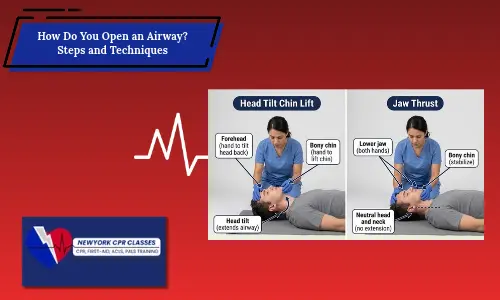
The two basic airway opening techniques are the head-tilt/chin-lift and the jaw thrust. The choice between the two basic maneuvers depends mainly on the presence or absence of suspected head or neck trauma.
| Situation | Technique | Main consideration |
| Unresponsive adult without suspected cervical spine injury | Head tilt-chin lift | Tilts the head backward and lifts the chin |
| Suspected head or neck trauma | Jaw thrust | Opens the airway while minimizing head and neck movement |
| Jaw thrust does not establish an adequate airway after head or neck trauma | Head tilt-chin lift may be necessary for trained rescuers | Establishing an open airway and providing ventilation take priority |
The 2025 American Heart Association guidelines recommend the head tilt-chin lift for an unresponsive adult when cervical spine injury is not suspected. For head and neck trauma, trained rescuers should initially use a jaw thrust without head extension. If the jaw thrust and an airway adjunct do not adequately open the airway, trained rescuers should use the head-tilt/chin-lift to establish an effective airway.
Head Tilt-Chin Lift
The head tilt-chin lift is the standard manual airway opening technique for an unresponsive adult when cervical spine injury is not suspected. The maneuver uses the forehead and lower jaw to reposition the head and tongue, helping open the airway and improve airflow.
Steps to Perform the Head Tilt-Chin Lift:
Step 1: Position the person
Place the person on their back when appropriate and position yourself near the head.
Step 2: Tilt the head
Place one hand on the forehead and gently press downward to tilt the head backward.
Step 3: Lift the chin
Place the fingertips of your other hand under the bony part of the chin. Lift the chin upward while maintaining the head tilt.
Step 4: Avoid soft tissue
Place your fingertips under the bony part of the chin and lift upward. Do not place your fingers on the soft area under the chin, as pressure there can push the soft tissue backward and block the airway.
Step 5: Maintain the position
Keep the head tilted and the chin lifted while assessing the airway and providing ventilation when indicated.
Step 6: Assess the airway
Check for signs of airway obstruction and listen for abnormal breathing sounds. An adequately opened airway should allow effective ventilation when rescue breaths are provided.
Jaw Thrust
The jaw thrust is used by trained rescuers when head or neck trauma creates concern for cervical spine injury. The technique lifts the mandible without extending the head and neck.
Steps to Perform the Jaw Thrust:
Step 1: Position yourself
Place the person on their back and position yourself at the top of the head.
Step 2: Place your hands
Place your hands on both sides of the person’s head and position your fingers near the bony parts of the lower jaw.
Step 3: Locate the jawbone
Place your fingers behind the angles of the lower jaw, just below the ears.
Step 4: Lift the jaw
Lift the lower jaw upward and forward using the bony part of the jaw. Avoid pressing on the soft tissues under the jaw or neck.
Step 5: Keep the head and neck still
Maintain the head and neck in a neutral position without tilting, twisting, or extending them while performing the jaw thrust.
How Do You Know if the Airway Is Open?
Performing the maneuver is only part of the process. You also need to determine whether the airway is actually patent.
Signs that the airway has opened can include:
- Air moving through the mouth or nose
- Easier delivery of rescue ventilation
- Chest movement during effective ventilation
- Reduction in obstructive airway sounds
- Improved airflow during spontaneous breathing
Merck Manual identifies the reduction or absence of upper airway obstruction sounds as one indication that the maneuver has been successful.
If the airway remains obstructed, reassess the person’s position and the technique being used. Additional airway management may be necessary for trained providers.
What Should You Do if a Neck Injury Is Suspected?
A suspected head or neck injury changes the initial airway approach.
For a trained rescuer, the 2025 AHA guidelines recommend opening the airway with a jaw thrust without head extension. This approach minimizes head and neck movement while helping open the airway.
The priority remains maintaining an open airway. If a jaw thrust and appropriate airway adjunct do not provide an adequate airway, trained rescuers should use a head-tilt/chin-lift to open the airway.
Lay rescuers should not use rigid cervical devices for spinal motion restriction during CPR. The AHA notes that use of these devices by untrained rescuers may be harmful.
What If the Airway Is Blocked by a Foreign Object?
A foreign body airway obstruction differs from airway blockage caused by the tongue falling backward in an unresponsive person.
Head-tilt/chin-lift and jaw thrust are manual techniques for opening the upper airway. They do not replace the recommended response for severe choking.
If a person is conscious and experiencing severe choking, the appropriate choking response should be followed. If the person becomes unresponsive, activate the emergency response system and begin CPR according to current guidelines.
This distinction matters when assessing an emergency. A person may have an obstructed airway from the tongue, a foreign object, secretions, swelling, or another cause, and each situation may require a different intervention.
Common Mistakes When Opening an Airway
Correct hand placement and the right technique can make the maneuver more effective.
Pressing on the soft tissues under the chin
When performing a head-tilt/chin-lift or jaw thrust, use the bony portions of the mandible. Pressure on the soft tissues under the chin or neck can contribute to airway obstruction.
Using head-tilt/chin-lift when trauma is suspected
If head or neck trauma is suspected, trained rescuers should initially use a jaw thrust without head extension.
Forgetting to reassess the airway
Do not assume the airway is open after positioning the head or jaw. Check for airflow and assess whether ventilation is effective.
Confusing airway opening with choking treatment
A head-tilt/chin-lift does not remove a foreign object from the airway. Severe choking requires a separate response based on the person’s condition.
Failing to maintain the airway
Manual airway maneuvers require continued attention. If the person’s airway position changes, the obstruction may return. The rescuer should continue monitoring the airway while providing appropriate care.
Without hands-on practice, rescuers may have difficulty performing airway opening techniques correctly during an emergency and addressing problems that may arise. Taking an AHA BLS class allows you to practice these techniques and develop practical skills for responding during an emergency.
Opening the Airway During CPR
Airway opening is an important part of basic life support when ventilation is required. In an unresponsive adult without suspected cervical spine injury, trained rescuers should use the head tilt-chin lift to open the airway.
When head or neck trauma is suspected, trained rescuers should initially use a jaw thrust without head extension. If that technique does not provide an adequate airway, a head-tilt/chin-lift may be necessary to allow effective ventilation.
Airway opening therefore works together with the other elements of CPR rather than serving as a separate procedure. Once an adequate airway is established, the rescuer can continue with the appropriate ventilation and resuscitation steps.
Can Airway Adjuncts Help Keep the Airway Open?
Trained healthcare professionals and rescuers may use airway adjuncts in appropriate situations. The AHA identifies oropharyngeal and nasopharyngeal airways as devices that can help maintain airway patency and facilitate ventilation in selected unresponsive adults.
These devices require appropriate training and assessment. An oropharyngeal airway is generally used in an unconscious person without a cough or gag reflex, while a nasopharyngeal airway has its own indications and contraindications.
For a basic airway opening article, these devices are best treated as an extension of manual airway management rather than the main focus.
Key Points to Remember
The main points are straightforward:
- The head tilt-chin lift is used for an unresponsive adult when cervical spine injury is not suspected.
- A jaw thrust without head extension is initially used by trained rescuers when head or neck trauma is suspected.
- Use the bony portion of the mandible rather than pressing on the soft tissues under the chin.
- Reassess the airway after performing the maneuver.
- If a jaw thrust does not establish an adequate airway after head or neck trauma, trained rescuers should use a head tilt-chin lift when necessary to establish the airway.
- Airway opening is different from treating a severe foreign body airway obstruction.
- Airway management should continue while the rescuer provides the appropriate emergency care.
Practice Airway Management Skills for Emergency Response
Proper airway management supports effective breathing and ventilation during CPR and other emergency situations. Using the correct technique can help maintain an open airway while you assess the person’s condition and provide appropriate care.
New York CPR Classes offers AHA-approved BLS, ACLS, and PALS certifications with flexible training options. Complete your online course and hands-on skills session, then receive your AHA Provider eCard on the same day. Your credential remains valid for 2 years and is recognized throughout the United States.
FAQs
Can you open an airway without tilting the head?
Yes. A jaw thrust can open the airway without head extension. Trained rescuers may use this technique when head or neck trauma is suspected.
What position should an unresponsive person be in to open the airway?
An unresponsive person should generally be placed on their back when appropriate for airway management. The rescuer can then use the appropriate airway opening technique based on the person’s condition.
What causes an airway to become blocked in an unconscious person?
The tongue can relax and fall backward, blocking the upper airway. Other causes include foreign objects, secretions, swelling, and other airway problems.
Can an airway open on its own after a person becomes unresponsive?
An airway may remain obstructed after a person becomes unresponsive, particularly when the tongue falls backward. The rescuer should assess airway patency rather than assume the airway is open.
What should you do if rescue breaths do not make the chest rise?
Reassess the airway and the technique being used. If the airway remains obstructed, reposition the airway and provide additional airway management as appropriate for the rescuer’s level of training.
When should an airway adjunct be used?
Trained rescuers may use an airway adjunct to help keep the airway open and support ventilation. The appropriate device depends on the person’s condition and the rescuer’s training.