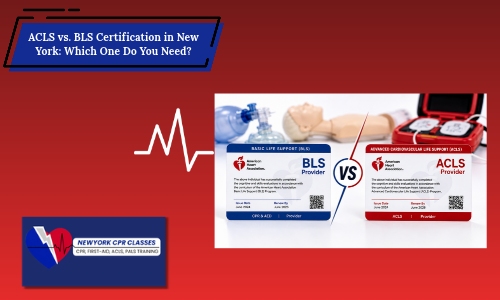
BLS and ACLS certifications both prepare healthcare professionals to respond to life-threatening emergencies, but they serve different purposes in clinical practice. BLS focuses on the essential skills used during cardiac arrest and other immediate emergencies, while ACLS addresses more advanced cardiovascular care.
The difference becomes especially important for healthcare professionals in New York, where certification requirements can vary by job role and workplace. A nurse working in a general clinical setting may have different requirements from a healthcare professional working in an emergency department or critical care unit.
Understanding what each certification covers can help you see how BLS and ACLS fit into different healthcare roles. The sections below explain their key differences, who may need each certification, and when having both may be appropriate.
What Is ACLS Certification?
Advanced Cardiovascular Life Support (ACLS) certification follows American Heart Association (AHA) guidelines and provides advanced training for healthcare professionals who respond to cardiac arrest and other serious cardiovascular emergencies. The course builds on BLS skills and covers patient assessment, cardiac rhythm recognition, airway management, emergency medications, electrical therapies, and resuscitation algorithms.
This advanced life-saving credential also emphasizes effective team dynamics and clinical decision-making during complex emergencies. The ACLS training helps healthcare professionals recognize life-threatening cardiovascular conditions and respond with appropriate interventions as part of a coordinated resuscitation team.
What Is BLS Certification?
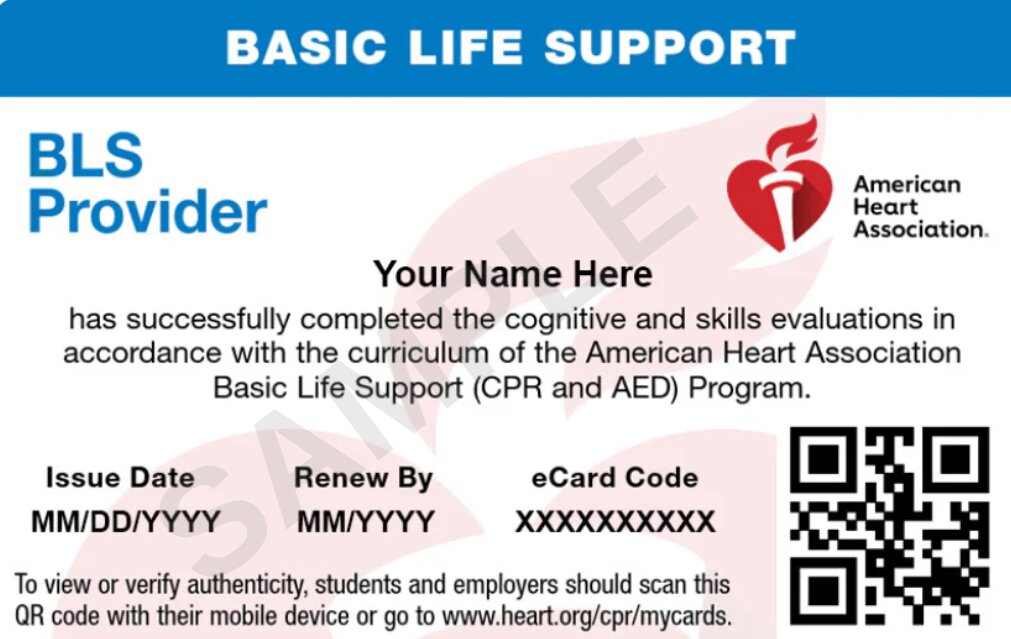
Basic Life Support (BLS) certification follows American Heart Association (AHA) guidelines and provides training for healthcare professionals responding to cardiac arrest, respiratory emergencies, and other life-threatening situations. The course covers high-quality CPR, AED use, rescue breathing, choking relief, and resuscitation for adults, children, and infants.
Although BLS certification is an entry-level course, it remains a healthcare provider-level course rather than a general public CPR class. The course is commonly taken by nursing students, dental assistants, EMT candidates, CNAs, and individuals entering clinical or allied health roles.
ACLS vs. BLS: What Is the Difference?
ACLS and BLS both support effective emergency response, but they address different levels of clinical responsibility. BLS focuses on fundamental resuscitation skills, while ACLS addresses more complex cardiovascular emergencies and advanced interventions.
The following comparison can help you understand where the two certifications differ:
| Feature | BLS Certification | ACLS Certification |
| Full Form | Basic Life Support | Advanced Cardiovascular Life Support |
| Primary Focus | CPR, AED use, ventilation, and choking relief | Advanced management of cardiac arrest and cardiovascular emergencies |
| Patient Age | Adults, children, and infants | Primarily adults |
| Key Skills | High-quality CPR, AED operation, rescue breathing, and bag-valve-mask ventilation | ECG rhythm recognition, advanced airway management, IV or IO access, electrical therapies, and resuscitation algorithms |
| Pharmacology | Not a primary focus | Emergency medications such as epinephrine and amiodarone |
| Team Training | Communication and coordination during resuscitation | Team dynamics, clinical decision-making, and leadership during complex emergencies |
| Prerequisites | No | Current BLS certification is required |
| Commonly Needed By | Nurses, physicians, EMTs, paramedics, dental professionals, students, and other healthcare workers | Physicians, nurses, paramedics, and other healthcare professionals involved in advanced cardiovascular care |
Skills Covered in ACLS and BLS Courses
The American Heart Association (AHA) develops the guidelines and course content used for ACLS and BLS training. Training providers use AHA guidelines as the basis for delivering certification courses that meet each program’s requirements.
ACLS Course Content
The ACLS course addresses several areas of adult emergency care, with emphasis on recognizing clinical changes, selecting appropriate interventions, and coordinating care during complex situations.
- Resuscitation and Airway Skills: High-quality CPR, defibrillation, cardioversion, bag-valve-mask ventilation, and advanced airway techniques.
- ECG and Rhythm Assessment: Recognizing cardiac rhythms, including ventricular fibrillation, pulseless electrical activity, and other clinically significant rhythms.
- Emergency Medications: Use of medications such as epinephrine, amiodarone, and atropine during appropriate emergencies.
- ACLS Algorithms: Application of treatment pathways for cardiac arrest, bradycardia, and tachycardia.
- Acute Cardiovascular and Stroke Care: Assessment and management considerations for acute coronary syndromes and acute ischemic or hemorrhagic stroke.
- Post-Cardiac Arrest Care: Initial care and stabilization following return of spontaneous circulation.
- Team-Based Resuscitation: Clear communication, role assignment, leadership, and coordination during resuscitation efforts.
BLS Course Content
BLS training focuses on recognizing life-threatening emergencies and providing immediate care until additional medical support is available. The course covers essential resuscitation techniques, emergency assessment, and coordinated response for adults, children, and infants.
- High-Quality CPR: Performing chest compressions with appropriate rate, depth, recoil, and ventilation while maintaining effective coordination during resuscitation.
- AED and Defibrillation: Learning to use an AED to analyze the heart rhythm and deliver a shock when indicated.
- Airway and Ventilation: Opening the airway and providing effective breaths using barrier devices or a bag-valve mask when appropriate.
- Choking Response: Recognizing severe airway obstruction and performing appropriate techniques to relieve choking in adults, children, and infants.
- Initial Emergency Assessment: Checking responsiveness, breathing, and other immediate signs of cardiac arrest to determine the appropriate response.
- Team Resuscitation: Using effective team dynamics to communicate clearly, coordinate tasks, and adjust roles during CPR when multiple rescuers are present.
- Special Emergency Situations: Applying BLS interventions in circumstances such as opioid associated emergencies and other situations that require immediate resuscitation care.
Who Needs ACLS or BLS Training in New York?
ACLS and BLS certification requirements vary by professional role, clinical responsibilities, and employer expectations. ACLS generally applies to professionals involved in advanced cardiovascular emergency care, while BLS focuses on essential life support skills used during cardiac and respiratory emergencies.
ACLS Certification
- Physicians and Surgeons: Particularly those working in emergency medicine, critical care, hospital medicine, and anesthesiology.
- Nurses and Advanced Practice Providers: Registered nurses, nurse practitioners, physician assistants, and certified registered nurse anesthetists working in settings that require advanced cardiovascular care.
- Emergency Medical Personnel: Paramedics and advanced EMTs who respond to cardiac arrest and other serious cardiovascular emergencies.
- Critical Care Professionals: Healthcare professionals working in emergency departments, intensive care units, telemetry units, step-down units, and cardiac care settings.
- Other Clinical Professionals: Respiratory therapists, pharmacists, and certain dental professionals involved in patient care or procedures requiring sedation.
- Healthcare Students and Trainees: Medical, nursing, and other clinical students who need ACLS certification for training, clinical placement, or future professional roles.
BLS Certification
- Healthcare Professionals: Nurses, physicians, physician assistants, nurse practitioners, and respiratory therapists who provide direct patient care.
- Emergency Medical Personnel: Emergency medical technicians, paramedics, and other first response professionals.
- Dental Professionals: Dentists, dental hygienists, and dental assistants who may need to respond to medical emergencies.
- Healthcare Students: Nursing students, medical students, and other healthcare students preparing for clinical practice.
- Clinical Support Staff: Patient care technicians, medical assistants, and other staff involved in direct patient care.
- Non-Healthcare Professionals: Coaches, teachers, childcare providers, fitness professionals, caregivers, and other individuals who may need basic life support training for their role or workplace.
Can You Take Both BLS and ACLS?
Yes, you can hold BLS and ACLS certifications when your professional role or employer requires both levels of resuscitation training. Having the appropriate credentials can also help you meet certification requirements for specific healthcare positions.
For example, a nurse working in a hospital may need BLS for basic emergency response and ACLS when the role involves managing cardiac arrest or other serious cardiovascular emergencies. A paramedic may also need both certifications when required for the position.
ACLS vs. BLS: Comparing the Cost in New York
CPR certification costs in New York vary depending on the course, training format, and whether you need the full course or a skills session. Here is what to expect for ACLS and BLS certification through New York CPR Classes
| Course | What’s Included | Price |
| BLS Online & Skills | Online HeartCode BLS + in-person skills check | $120 |
| BLS Skills Only | In-person skills check only (for those who finished online elsewhere) | $90 |
| ACLS Online & Skills | Online HeartCode ACLS + in-person skills check | $295 |
| ACLS Skills Only | In-person skills check only (for those who finished online elsewhere) | $150 |
How Long Do ACLS and BLS Credentials Remain Valid?
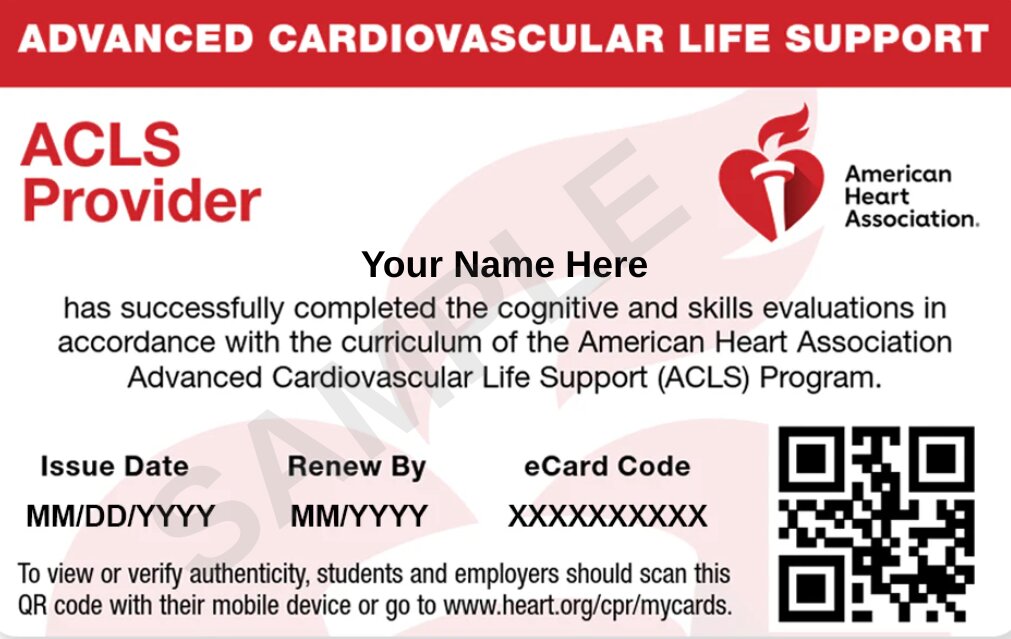
ACLS and BLS credentials from the American Heart Association (AHA) generally remain valid for two years from the date of course completion. After the credential expires, individuals typically need to complete the appropriate renewal course to maintain their certification.
AHA recommends completing a renewal course before the current credential expires. Employers may also have specific requirements for maintaining BLS or ACLS certification, so check your AHA Provider eCard and workplace policy for the applicable renewal date.
Which Certification Is Right for You?
If you are entering healthcare, completing a nursing or allied health program, or working in a role that does not involve advanced cardiac care, BLS is generally the appropriate place to start. The course provides foundational life support training for healthcare providers and is commonly required for clinical education and entry-level healthcare positions.
ACLS is more appropriate for professionals involved in advanced cardiovascular emergency care, such as those working in emergency departments, critical care, cardiology, or advanced EMS roles. Some positions require both credentials, so reviewing your employer’s certification requirements or clinical program guidelines can help you determine which training you need.
Final Thoughts
BLS and ACLS serve different levels of emergency care and can complement each other for healthcare professionals. Choosing the appropriate certification depends on your professional role, clinical responsibilities, and employer requirements. Reviewing these requirements before registering can help you select the course that matches your training or workplace needs.
New York CPR Classes offers American Heart Association (AHA) BLS and ACLS certification with flexible online learning options. Participants complete the online coursework first, then visit a nearby skills verification station for the required hands-on skills session. You will receive an AHA eCard on the same day after completing the required course components, and the certification is accepted throughout New York and across the United States.
Frequently Asked Questions
Can I Take ACLS Training Without BLS Certification?
No. A valid BLS credential is required before taking the ACLS course.
Can I Complete BLS and ACLS Training on the Same Day?
Yes, you can complete both BLS and ACLS training on the same day. Complete the required online coursework beforehand, then schedule both skills sessions for the same day.
Do New York Employers Accept AHA BLS and ACLS Certification?
Yes. AHA BLS and ACLS certifications are widely accepted by healthcare employers in New York. Specific requirements can vary by employer and position, so check your workplace requirements before registering.
Can I complete the online portion of the course from home?
Yes. The online coursework can generally be completed remotely using a compatible computer, tablet, or mobile device. Participants then complete the required hands-on skills session at the designated verification station.
Can I renew my BLS or ACLS certification before it expires?
Yes. Completing a renewal course before the current credential expires can help maintain continuous certification. Your employer may also have specific requirements regarding when renewal should be completed.