Caring for infants and children during a medical emergency requires specialized knowledge beyond basic life support. Pediatric patients respond differently to illness and injury, making rapid assessment, accurate treatment, and effective teamwork essential.
PALS certification equips New York healthcare providers with the knowledge and skills to recognize life-threatening conditions early and deliver evidence-based pediatric care. Hospitals, urgent care centers, ambulance services, surgical centers, and many specialty practices rely on providers who understand advanced resuscitation techniques. Completing PALS training helps medical teams respond with greater confidence while following the latest American Heart Association guidelines.
This guide explains the importance of PALS certification for New York healthcare providers, what the training includes, who benefits from this credential, and how it supports effective care during critical situations involving infants and children.
What Is PALS Certification?
PALS certification is an advanced life support credential that prepares healthcare providers to care for infants and children experiencing life-threatening medical emergencies. Training follows the latest American Heart Association guidelines and focuses on rapid assessment, clinical decision making, effective teamwork, and advanced resuscitation techniques used in pediatric care.
The PALS acronym can be broken down into three key components:
- Pediatric: Care focused on the unique medical needs of infants and children.
- Advanced: Higher-level knowledge and interventions that build on Basic Life Support.
- Life Support: Techniques used to maintain or restore breathing, circulation, and other vital functions during critical illness or injury.
Why PALS Certification Matters
Many healthcare employers require PALS certification for professionals who care for infants and children. Beyond meeting workplace requirements, maintaining an active certification helps providers stay current with the latest American Heart Association guidelines and best practices.
- Supports early recognition of critical conditions: Helps identify respiratory distress, shock, and cardiac arrest before a patient’s condition worsens.
- Strengthens clinical decision-making: Teaches healthcare providers how to evaluate a child’s condition, identify the level of care needed, and select the right treatment approach.
- Improves teamwork and communication: Reinforces clear communication and defined team roles during resuscitation.
- Enhances confidence in pediatric care: Helps healthcare providers apply their knowledge and skills when assessing and managing critical conditions involving infants and children.
- Promotes evidence-based care: Aligns with the latest American Heart Association guidelines and recommended practices for pediatric resuscitation.
- Meets employer requirements: Many hospitals and healthcare organizations require current PALS certification for professionals involved in pediatric patient care.
- Supports better patient outcomes: Early assessment, timely intervention, and coordinated care contribute to safer and more effective treatment for infants and children.
What Do You Learn During PALS Training?
PALS training prepares healthcare providers to recognize, assess, and manage life-threatening conditions affecting infants and children. The course combines clinical knowledge with hands-on practice, helping participants apply the latest American Heart Association guidelines during pediatric emergencies.
Pediatric Assessment and Early Recognition
Early recognition is one of the most important parts of pediatric emergency care. Healthcare providers learn how to perform a systematic assessment using the Pediatric Assessment Triangle and other evaluation methods to quickly recognize signs of critical illness or injury in infants and children. Training also covers respiratory distress, respiratory failure, and different types of shock, teaching providers how to recognize warning signs, evaluate the severity of the condition, and provide appropriate care based on the patient’s needs.
Airway and Breathing Management
Children have unique airway anatomy and breathing patterns that require specialized assessment and management approaches compared with adult patients. PALS training teaches healthcare providers how to assess the airway, recognize breathing problems, and provide effective ventilation using appropriate techniques and equipment. Participants also learn when airway interventions are needed to improve oxygenation and support normal breathing.
Cardiac Rhythm Recognition and Resuscitation
PALS provides healthcare providers with the knowledge needed to recognize pediatric cardiac rhythms and respond using evidence-based resuscitation techniques. Training covers high-quality CPR, rhythm recognition, defibrillation, synchronized cardioversion, and the management of bradycardia, tachycardia, and cardiac arrest. Participants also learn the principles of post-cardiac arrest care to support patient recovery after return of spontaneous circulation.
Medications and Vascular Access
Timely medication administration and reliable vascular access are essential during many pediatric emergencies. Training explains when medications may be required, how vascular access supports advanced life support, and the factors healthcare providers should consider while delivering emergency care. These concepts help ensure interventions are performed safely and efficiently.
Team Dynamics and Clinical Decision Making
Successful resuscitation depends on more than clinical skills alone. PALS training emphasizes clear communication, effective leadership, and coordinated teamwork so every team member understands their role during a pediatric emergency. Healthcare providers also strengthen their clinical decision-making skills by applying assessment findings, selecting appropriate interventions, and adapting treatment as the patient’s condition changes.
Who Needs PALS Certification in New York?
Various clinical roles benefit from the knowledge and skills covered in PALS certification. Healthcare organizations across New York commonly require or recommend this credential for professionals who provide care to critically ill or injured infants and children.
Common healthcare roles include:
| Healthcare Category | Common Job Roles |
| Medical Doctors | Pediatricians, emergency physicians, hospitalists, anesthesiologists, critical care physicians, and medical residents |
| Nursing Roles | Registered nurses, pediatric nurses, emergency department nurses, neonatal intensive care unit nurses, pediatric intensive care unit nurses, and operating room nurses |
| Prehospital Care Providers | Paramedics, Advanced Emergency Medical Technicians, flight paramedics, and flight nurses |
| Advanced Clinical Providers | Nurse practitioners, physician assistants, Certified Registered Nurse Anesthetists, and respiratory therapists |
Is PALS Certification the Same as ACLS Certification?
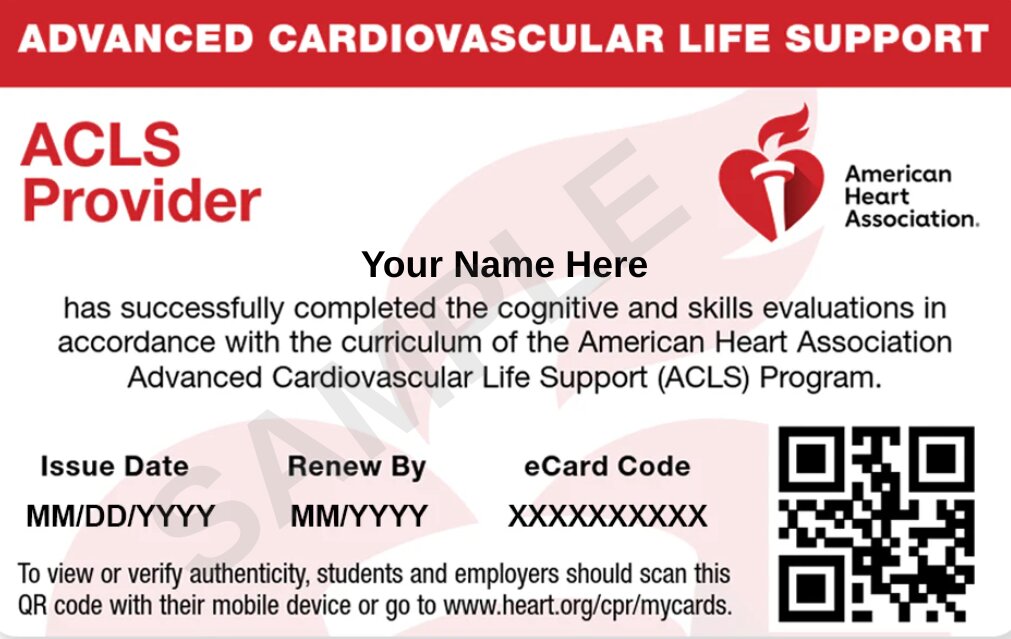
No. PALS and ACLS are separate American Heart Association certifications that prepare healthcare providers for different patient populations and clinical situations. Although both courses teach advanced life support principles, the assessment methods, treatment approaches, and emergency algorithms differ.
| PALS Certification | ACLS Certification |
| Intended for the care of infants and children | Intended for the care of adult patients |
| Focuses on recognizing and treating pediatric respiratory and cardiovascular emergencies | Focuses on recognizing and treating adult cardiovascular emergencies, stroke, and acute coronary syndromes |
| Applies pediatric assessment methods based on the child’s age and condition | Applies assessment methods developed for adult patients |
| Teaches the identification and treatment of pediatric cardiac rhythms | Teaches the identification and treatment of adult cardiac rhythms |
| Covers pediatric resuscitation techniques, airway support, and team-based emergency care | Covers advanced cardiovascular interventions, airway support, and team-based emergency care for adults |
What Are the Requirements for PALS Certification?
Before enrolling in a PALS course, participants should typically have:
- Current BLS certification: A valid Basic Life Support credential, as PALS builds on core CPR and resuscitation skills.
- Basic ECG knowledge: Familiarity with common cardiac rhythms and the ability to interpret basic ECG findings.
- Knowledge of emergency medications: Understanding of medications commonly used during emergency care and their purpose in patient treatment.
- Understanding of airway management: Knowledge of how to assess the airway, identify breathing problems, and apply basic techniques to manage airway concerns.
- Clinical healthcare experience: Experience working in a healthcare environment where patient assessment and emergency response are part of the role.
How Long Does It Take to Complete PALS Certification?
The time required to complete PALS certification depends on the course format, prior experience, and the participant’s understanding of pediatric emergency care concepts. Healthcare providers who are renewing their certification or have prior resuscitation experience may be more familiar with the material, while first-time participants may need additional time for review.
Factors that can affect the completion timeline include:
- First-time certification or renewal training
- Online, classroom, or blended learning format
- Previous experience with pediatric care and emergency response
- Time available to complete the required coursework
- Familiarity with CPR, assessment, and resuscitation skills
How to Prepare for PALS Training
Preparing before your PALS training can help you make the most of the course and feel more confident during both the learning and skills evaluation. Spending time reviewing key concepts in advance allows you to focus on applying your knowledge during pediatric emergency scenarios.
Before your training, consider the following:
- Review your BLS knowledge: Refresh CPR techniques, AED use, and basic life support principles, as PALS builds on these essential skills.
- Understand pediatric assessment: Familiarize yourself with the Pediatric Assessment Triangle and the systematic approach to evaluating infants and children.
- Refresh rhythm recognition: Review common pediatric cardiac rhythms and understand the algorithms used for managing bradycardia, tachycardia, and cardiac arrest.
- Complete any required online coursework: Finish the online portion of a blended learning course before attending the hands-on skills session.
- Read the PALS Provider Manual: Study the course material before training to become familiar with key concepts, guidelines, and skills covered during the course.
- Bring required documents: Have any requested documentation, such as your course completion certificate or current BLS certification, ready before your scheduled session.
- Be prepared for hands-on practice: Wear comfortable clothing and expect to perform CPR, airway management, and other practical skills during the course.
How to Complete Your PALS Certification?
Earning PALS certification involves completing the required training and successfully demonstrating competency in pediatric emergency care skills. Many healthcare providers in New York choose a blended learning format that allows them to complete the online coursework at their own pace before attending a hands-on skills evaluation.
The certification process typically includes:
- Register for an American Heart Association PALS course.
- Complete the HeartCode online coursework at your own pace using a computer, tablet, or smartphone.
- Schedule and attend a hands-on skills session at a convenient CPR verification station.
- Demonstrate the required skills during the competency evaluation.
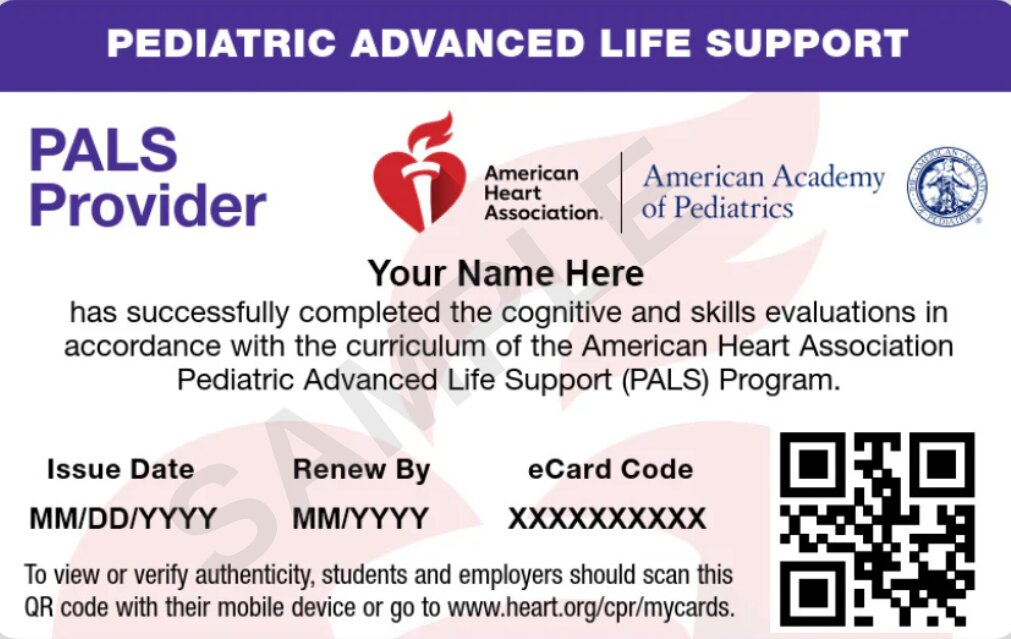
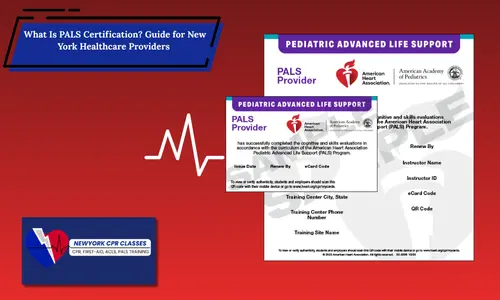
- Receive your American Heart Association PALS Provider eCard after completing the online coursework and skills session.
Note: Your PALS certification remains valid for 2 years. Regular renewal helps keep your knowledge and skills aligned with the latest American Heart Association guidelines.
Advance Your Career with PALS Certification in New York
PALS certification helps healthcare providers maintain the skills needed to evaluate and manage serious conditions affecting infants and children. The training supports professionals who work in fast-paced healthcare environments where effective assessment, teamwork, and emergency response are essential.
New York CPR Classes offers American Heart Association PALS certification with a flexible learning process and convenient skills verification stations for healthcare providers with busy schedules. Participants can complete their coursework around their personal and professional commitments and receive their AHA PALS Provider eCard on the same day after successfully completing the required skills evaluation. The credential is nationally recognized and can support professional requirements across healthcare settings throughout the United States.
Still Have Questions About PALS Certification? Find Your Answers Here
Is PALS certification required for all healthcare providers?
No. PALS certification is not required for every healthcare role. The certification is generally expected for healthcare professionals who regularly assess, treat, or respond to critical conditions involving infants and children.
Is PALS certification difficult to complete?
PALS certification requires participants to understand pediatric assessment, treatment algorithms, and resuscitation skills. Reviewing course materials and refreshing BLS knowledge before training can help participants prepare for the certification process.
Can PALS certification help healthcare professionals advance their careers?
PALS certification can support healthcare professionals who work in roles involving pediatric patient care. Many employers value current PALS credentials for positions that involve emergency response and critical care.
What happens if my PALS certification expires?
If a PALS certification expires, healthcare providers generally need to complete a new PALS course to obtain a current certification. Employers may require a valid PALS credential for professionals involved in pediatric emergency care.
Is PALS certification from New York CPR Classes recognized across the U.S.?
Yes. American Heart Association PALS certification from New York CPR Classes is recognized nationwide and can be used by healthcare providers in healthcare settings across the United States.