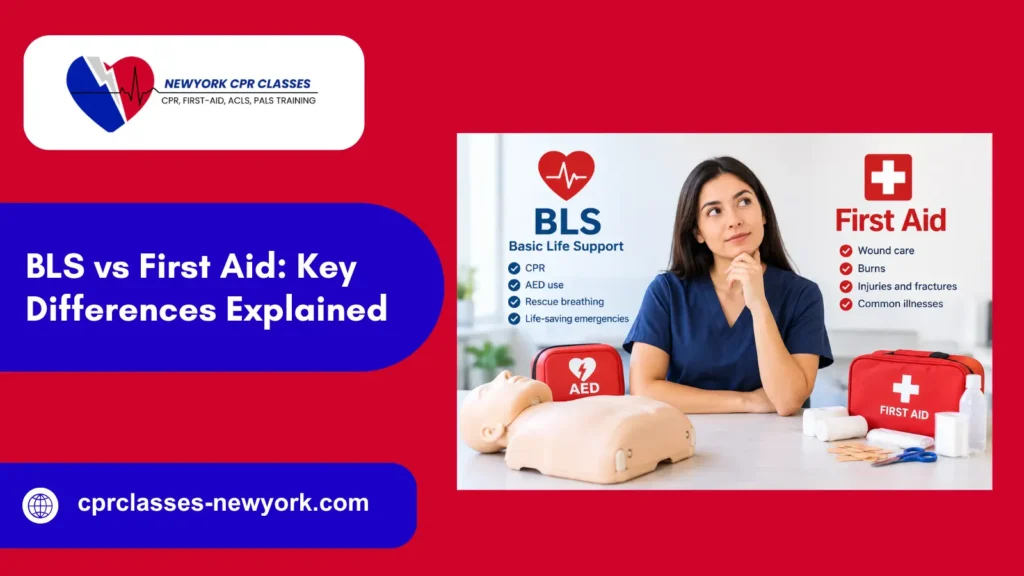
Basic Life Support (BLS) and First Aid training both prepare people to respond to medical emergencies, but they focus on different skills. BLS focuses on CPR, AED use, and lifesaving emergencies, while First Aid covers injuries, illnesses, and immediate emergency care.
Choosing between BLS and First Aid depends on your job requirements, the emergencies you may encounter, and the skills you need to learn. This guide compares BLS and First Aid training, including their skills, course content, CPR and AED coverage, certification requirements, duration, and how to choose the right course for your job
What Is BLS?
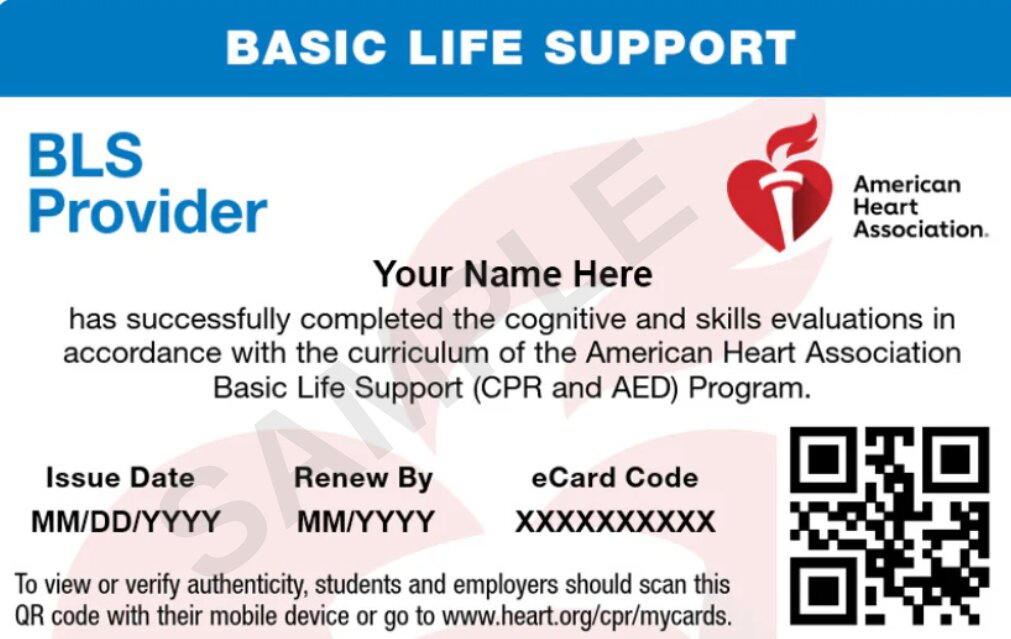
Basic Life Support (BLS) is a lifesaving training course that teaches participants how to respond to cardiac arrest, breathing emergencies, and choking. The American Heart Association (AHA) develops the guidelines used in BLS training and offers the BLS Provider course, which covers high-quality CPR, AED use, rescue breathing, and team-based resuscitation.
BLS certification is intended for healthcare professionals, including nurses, doctors, EMTs, and other healthcare workers who need lifesaving skills. Healthcare students and other individuals whose jobs require BLS credentials can also take this course.
What Does BLS Training Cover?
A BLS course typically covers the following skills:
- CPR for adults, children, and infants: Performing chest compressions and providing appropriate breaths according to the patient’s age and condition.
- AED use: Recognizing when an AED is needed and using it safely during cardiac arrest.
- Rescue breathing and ventilation: Providing appropriate breaths to support a person who is not breathing normally.
- Choking response: Relieving foreign body airway obstruction in adults, children, and infants.
- Team-based resuscitation: Communicating effectively and coordinating actions during CPR with multiple rescuers.
- Recognition of life-threatening emergencies: Identifying conditions that require immediate resuscitation and emergency intervention.
The exact course content depends on the training provider and program. The AHA BLS course includes hands-on practice and skills testing as part of its standard completion requirements.
What Is First Aid?
First Aid training teaches participants how to recognize injuries and illnesses, provide immediate care, and prevent conditions from worsening before professional medical help arrives.
Unlike BLS, which focuses on CPR and other lifesaving skills, First Aid covers a wider range of emergencies, including burns, bleeding, and other common injuries and illnesses. This training helps people respond to emergencies at home, at work, or in public places.
What Does First Aid Training Cover?
A First Aid course may cover the following topics:
- Bleeding and wounds: Applying direct pressure and providing initial care for bleeding injuries.
- Burns: Recognizing different types of burns and providing appropriate initial care.
- Sprains and fractures: Supporting an injured area and recognizing when medical attention is needed.
- Medical emergencies: Recognizing conditions such as heart attacks, strokes, seizures, and diabetic emergencies.
- Allergic reactions: Identifying serious allergic reactions and responding according to the training provided.
- Environmental emergencies: Responding to heat-related illnesses, cold exposure, and other environmental hazards.
- Choking: Recognizing airway obstruction and applying appropriate choking relief techniques.
- Emergency response: Recognizing an emergency, calling for professional medical help, and providing immediate care based on your training.
The topics covered vary by course. For example, the AHA Heartsaver First Aid course focuses on common first aid emergencies, while the Heartsaver First Aid CPR AED course combines first aid, CPR, and AED training.
What Is the Difference Between BLS and First Aid?
The primary difference between BLS and First Aid is the type of emergency response each course emphasizes. BLS focuses on maintaining circulation and breathing during life-threatening emergencies, while First Aid teaches initial care for a wider variety of injuries and illnesses.
| Comparison | BLS | First Aid |
| Full name | Basic Life Support | First Aid |
| Main purpose | Responding to life-threatening emergencies and supporting vital functions | Providing initial care for injuries and illnesses |
| Primary focus | CPR, ventilation, AED use, and resuscitation teamwork | Wounds, burns, injuries, sudden illnesses, and emergency care |
| CPR training | Core component | Depends on the course selected |
| AED training | Included in standard AHA BLS training | Included when the selected First Aid course includes AED training |
| Typical audience | Healthcare professionals, healthcare students, and other personnel who require BLS | General public, employees, caregivers, and other people who may need to respond to emergencies |
| Practical training | Includes hands-on CPR and resuscitation skills practice | Includes practical skills appropriate to the selected course |
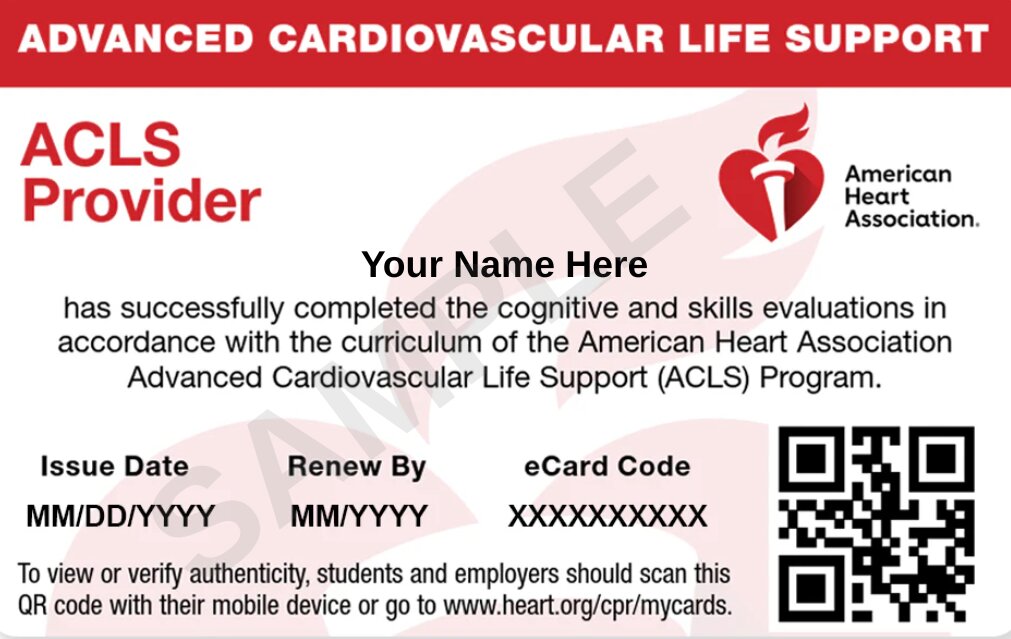
| Certification | AHA BLS Provider card when all course requirements are completed | A course completion card or certificate according to the provider and course |
| Validity | AHA BLS Provider card is generally valid for two years | AHA Heartsaver First Aid cards are generally valid for two years |
Course requirements and recognition vary by employer, training provider, and applicable regulations. Always verify the credential your workplace requires before enrolling.
Which Course Should You Take?
The right course depends on your responsibilities and the skills you need to demonstrate. Before enrolling, check whether your employer requires a specific course or completion card.
Choose BLS If You Work in Healthcare
BLS is generally the appropriate choice if you are a nurse, physician, nursing student, EMT, or another professional whose role requires basic life support skills.
You should consider AHA BLS certification if you need to:
- Perform CPR on adults, children, and infants.
- Use an AED during cardiac arrest.
- Provide effective rescue breaths or ventilation.
- Participate in single-rescuer and team-based resuscitation.
- Meet an employer’s BLS certification requirements.
Healthcare employers may specify an AHA BLS Provider card or accept another credential. Confirm the requirements before booking a course.
Choose First Aid If You Need General Emergency Response Skills
First Aid is often the better starting point if you want to respond to injuries and sudden illnesses without working in a role that requires BLS certification.
First Aid training may be appropriate for:
- Teachers and school staff.
- Office employees and workplace safety personnel.
- Parents, caregivers, and childcare workers.
- Coaches and sports staff.
- Community members who want practical emergency response skills.
Some employers require a specific First Aid certification, while others may also require CPR and AED training based on workplace safety needs.
Should You Take Both BLS and First Aid?
Taking both courses can provide a broader set of emergency response skills. BLS develops your ability to respond to cardiac arrest and other life-threatening emergencies, while First Aid adds training for injuries, bleeding, burns, and other medical conditions.
Consider both if your job requires separate BLS and First Aid credentials, or if you want to prepare for a wider range of emergencies. However, you do not automatically need both certifications. Your job responsibilities and your employer’s certification requirements will help you decide which course to take.
Does BLS Include First Aid?
No, BLS certification does not include First Aid certification. They are separate courses that cover different emergency response skills.
BLS focuses on CPR, AED use, choking relief, and other lifesaving skills. First Aid covers a wider range of emergencies, including burns, bleeding, and injuries.
If you need both certifications, you must complete the requirements for each course. You can also choose a combined First Aid CPR AED course for training in general emergency care, CPR, and AED use. Check your employer’s requirements before enrolling.
Is BLS Better Than First Aid?
Neither course is universally better than the other. They serve different purposes and teach complementary emergency response skills.
BLS is more appropriate for people who need structured training in CPR, ventilation, AED use, and team-based resuscitation. First Aid is more suitable for people who need to recognize and provide initial care for a broad range of injuries and illnesses.
For example, a healthcare professional who must perform CPR as part of their job may need BLS certification. A workplace employee who needs to respond to cuts, burns, and other common injuries may benefit more from First Aid training.
Choose the course that fits your job responsibilities and meets your employer’s certification requirements.
How Long Do BLS and First Aid Certifications Last?
For American Heart Association courses, both the BLS Provider card and Heartsaver First Aid card are generally valid for two years. Participants should check the expiration date on their card and arrange renewal according to their employer’s requirements.
The time needed to complete each course varies by training format, prior experience, and course content. AHA BLS training typically takes a few hours, while the Heartsaver First Aid course usually takes less time to complete.
Choose the Right Training With New York CPR Classes
BLS and First Aid training cover different emergency response skills. BLS focuses on CPR, AED use, and lifesaving emergencies, while First Aid teaches participants how to provide immediate care for injuries and illnesses. Choosing the right course depends on your job responsibilities and certification requirements.
New York CPR Classes offers American Heart Association BLS training at multiple locations across New York. You can complete online coursework before attending an in-person skills session and receive your AHA BLS Provider card after successfully meeting all course requirements.
Frequently Asked Questions
Is BLS the Same as First Aid?
No, BLS and First Aid are separate courses that teach different emergency response skills. BLS focuses on CPR, AED use, and lifesaving techniques, while First Aid covers the immediate care of injuries and illnesses, such as burns, bleeding, and other common emergencies.
Is BLS Certification Required for Nurses?
Many nursing positions require a current BLS Provider card, and some employers specifically require certification from the American Heart Association. Requirements depend on the employer, position, and healthcare setting. Check your employer’s policies before registering.
Can You Take First Aid Without CPR?
Yes. Some First Aid courses teach First Aid skills without including CPR. Other courses combine First Aid, CPR, and AED training. Review the course description to determine which skills and credentials are included.
Does First Aid Certification Qualify You to Perform CPR?
Not necessarily. A First Aid course only qualifies you for the training it includes. If you want to learn CPR, choose a course that explicitly includes CPR instruction and practical skills training, such as First Aid CPR AED.
Which Course Is Better for Workplace Safety?
The right course depends on your job duties and workplace safety requirements. First Aid training helps employees respond to common injuries and illnesses, while BLS training is often required for healthcare professionals and other roles that involve lifesaving emergencies. Some workplaces require both First Aid and CPR training.
Does BLS Cover Choking?
Yes. BLS training covers choking relief for adults, children, and infants. First Aid courses may also teach choking relief, depending on the course content.
Do I Need First Aid if I Have BLS?
Yes, if your job requires First Aid certification in addition to BLS. BLS focuses on CPR, AED use, and lifesaving emergencies, while First Aid covers injuries and illnesses such as burns, bleeding, and sprains. Check your employer’s requirements to determine whether you need both certifications.
Is BLS Harder Than a First Aid Course?
BLS is generally more challenging than a First Aid course because it covers high-quality CPR, AED use, rescue breathing, choking relief, and team-based resuscitation. First Aid focuses on providing immediate care for injuries and illnesses. You can also use AHA BLS practice tests to review key concepts and prepare for the BLS Provider course assessment.