Healthcare professionals across New York often need CPR certification to meet employer requirements, maintain professional credentials, or prepare for new career opportunities. Finding a training option that fits around your rotating shifts, overnight schedules, and personal commitments can be challenging.
A CPR verification station offers a convenient way to complete the required hands-on skills session after finishing the online learning portion. Your practical skills are evaluated using voice-assisted manikins that deliver immediate feedback throughout the session.
This guide helps New York healthcare professionals understand CPR verification stations, including how they work, benefits, available courses, and how they compare with traditional CPR classes.
What Is a CPR Verification Station?
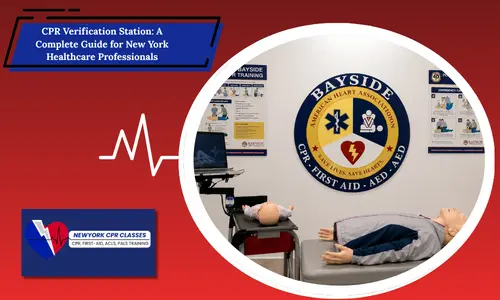
A CPR verification station is an automated, self-guided training station used to verify CPR competency as part of an American Heart Association blended learning course. Participants visit the training station after completing the required online learning component to finish the practical portion of the course.
An advanced voice-assisted manikin evaluates performance according to AHA standards throughout the session. Successful completion of the hands-on skills also fulfills the certification requirements
How Does a CPR Verification Station Work?
The process is simple and follows four straightforward steps from registration to certification. Completing each step in order helps make the experience efficient and stress-free.
Step 1: Complete the HeartCode Online Course
Begin by choosing the appropriate American Heart Association blended learning course, based on your certification requirements. After registering, access the required HeartCode online coursework from any smartphone, tablet, or computer and learn the interactive lessons at your own pace. Once you complete the online part and pass the assessment, you are ready to schedule the practical portion at the CPR verification station.
Step 2: Visit the Training Station
After completing the online coursework and assessment, attend your scheduled appointment at the CPR verification station. During the in-person session, participants perform the required hands-on skills to demonstrate CPR competency.
Step 3: Receive Immediate Performance Feedback
No instructor is present at the training station. You have to perform the required hands-on skills using a voice-assisted manikin that provides real-time feedback throughout the session. The technology evaluates key areas, including compression rate, compression depth, chest recoil, ventilation, and overall CPR technique, to help confirm that you meet the required competency standards.
Step 4: Receive Your AHA Provider eCard
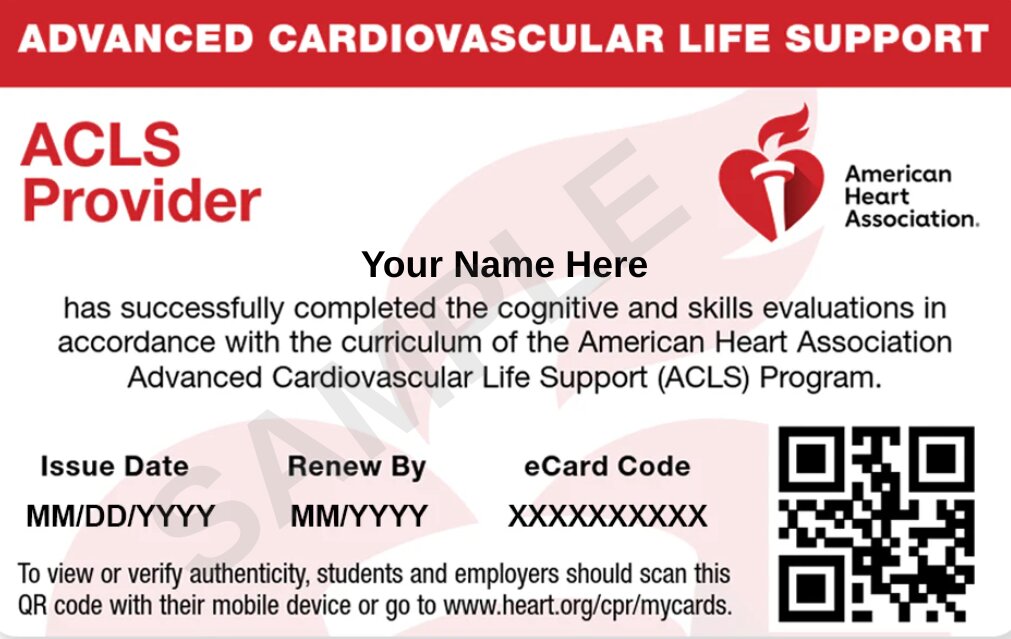
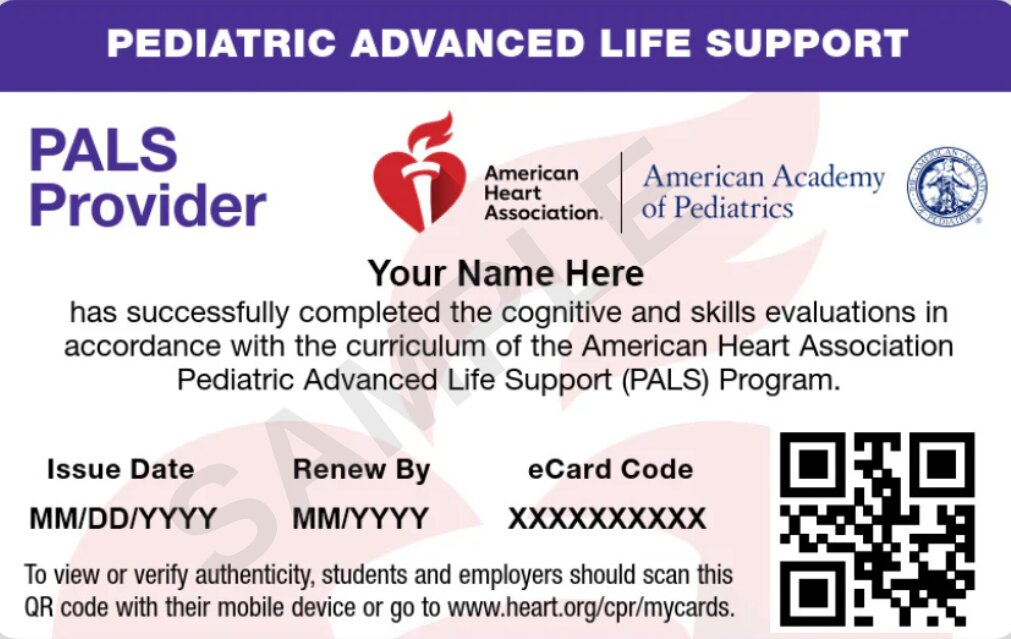
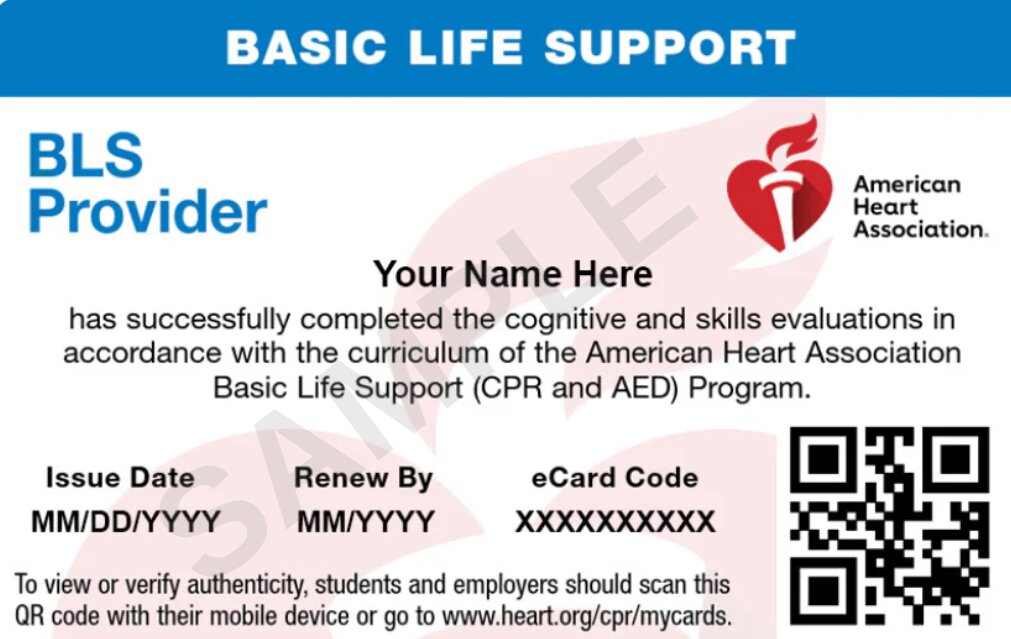
Once you complete all course requirements, your certification is finalized, and your official American Heart Association Provider eCard is issued the same day. The certification remains valid for two years and is widely accepted by healthcare employers throughout New York and across the United States.
What Is a Voice-Assisted Manikin and How Does It Work?
A voice-assisted manikin (VAM) is an interactive CPR training device that uses built-in sensors and connected technology to monitor CPR performance. The system provides spoken guidance and real-time feedback while users perform CPR techniques, allowing them to understand how their performance compares with established standards.
The manikin tracks key areas of CPR performance and provides feedback through audio prompts and a connected display. The technology evaluates:
- Compression rate to measure the speed of chest compressions.
- Compression depth to evaluate how far each compression is performed.
- Chest recoil to confirm proper chest release after each compression.
- Ventilation to assess the delivery of rescue breaths.
The voice-assisted manikin creates a self-guided evaluation experience by providing immediate feedback without requiring an instructor to monitor each step.
Why Healthcare Professionals in New York Choose CPR Verification Stations
Healthcare professionals often have demanding schedules. Medical students balance academics with clinical training, nurses work twelve-hour shifts, physicians rotate through different departments, and emergency responders may be called in at any time. CPR verification stations provide a flexible certification option that allows them to complete training without disrupting their personal or professional commitments.
Key benefits include:
- Flexible scheduling options for busy healthcare professionals.
- Self-paced HeartCode online learning that can be completed from home or another convenient location.
- A focused in-person session for required hands-on skills.
- Voice-assisted manikin feedback during the evaluation.
- Official AHA Provider eCard issued on the same day after successful completion.
- Certification accepted by healthcare employers throughout New York and across the United States.
How CPR Verification Stations Differ From Traditional CPR Classes
A CPR verification station is different from a traditional instructor-led CPR class. Traditional classes usually include a live instructor who teaches the course material, demonstrates techniques, and observes participants during the practical portion. A CPR verification station uses a blended learning format where the online portion is completed independently before attending the in-person session.
Both options allow participants to complete an AHA course and receive the same official Provider eCard.
Key Differences Between CPR Verification Stations and Traditional CPR Classes
| Feature | CPR Verification Station | Traditional CPR Class |
| Learning Format | Participants complete the online HeartCode coursework before attending the in-person session. | Participants learn course content through instructor-led classroom training. |
| Skills Evaluation | A voice-assisted manikin provides real-time feedback and evaluates CPR performance. | An instructor observes performance and provides feedback during the session. |
| Instructor Presence | No instructor is present during the verification session. | A certified instructor leads and monitors the class. |
| Scheduling | Participants can complete the online learning at their own pace and schedule the session when it is convenient for them. | Classes are held at scheduled times and require participants to attend the in-person session with an instructor and other students. |
| Training Experience | Provides a self-guided evaluation environment with technology-based feedback. | Provides direct interaction and guidance from an instructor. |
Courses Available Through CPR Verification Stations
Several American Heart Association certification programs can be completed using the blended learning format. Each course combines online instruction with an in-person skills verification session.
Common courses include:
- Basic Life Support
- Advanced Cardiovascular Life Support
- Pediatric Advanced Life Support
- Heartsaver CPR AED
- Heartsaver First Aid CPR AED
Course availability may vary by training center, so students should confirm which certifications are offered before scheduling an appointment.
Tips Before Your Skills Verification Appointment
Preparing before your appointment helps the session move smoothly and gives you greater confidence during the skills evaluation. Taking time to review key concepts before your visit can help you feel more comfortable during the evaluation.
A few simple steps can help you prepare:
- Finish all online coursework before scheduling the appointment.
- Review adult, child, and infant CPR techniques.
- Wear comfortable clothing that allows unrestricted movement.
- Arrive a few minutes before your scheduled time.
- Bring any confirmation details requested by the training center.
- Follow all instructions provided by the voice-guided manikin during the evaluation.
Get Your American Heart Association Certification With New York CPR Classes
CPR certification can be difficult to fit into busy schedules, especially for healthcare professionals, students, and working individuals. Flexible training options make it easier to complete certification while balancing other commitments.
At New York CPR Classes, we provide certification options through a convenient learning model. Backed by Same Day CPR, an authorized American Heart Association Training Center, our training locations throughout New York offer BLS, ACLS, PALS, CPR AED, and First Aid courses. Your official eCard is issued the same day, allowing you to submit proof of certification whenever required.
Need More Information About CPR Verification Stations?
Can I complete my CPR certification if I have a busy healthcare schedule?
Yes. The blended learning format allows participants to complete the online portion at their own pace and choose a skills session appointment that fits their schedule.
Do employers accept CPR certification from a verification station?
Yes. CPR certification from a verification station is accepted by many healthcare employers when it is completed through an approved American Heart Association training provider, and all course requirements are successfully met.
What should I bring to my CPR verification station appointment?
Participants should bring any required confirmation details provided during registration. Comfortable clothing is also recommended to allow proper movement during the skills session.
Can I complete HeartCode coursework from my phone?
Yes. HeartCode online coursework can be accessed from compatible devices, allowing participants to complete the learning portion from a convenient location.
How often do CPR certifications need to be renewed?
American Heart Association CPR certifications are generally valid for two years. Renewal is recommended before the certification expires to maintain current credentials.