If you need BLS certification in New York, you may be deciding between the American Heart Association and the American Red Cross. While both AHA and ARC offer BLS certification for healthcare professionals, they are separate certification programs with different issuing organizations and credentials. The certification you should choose depends on what your employer, school, licensing authority, or professional role requires.
AHA and ARC BLS cover many of the same essential skills, including CPR, AED use, response to airway obstruction, and care for adults, children, and infants. The main differences between AHA and ARC BLS are who provides the certification, how the training is delivered, and what type of credential you receive.
This guide compares AHA BLS and ARC BLS certifications and explains what New York healthcare professionals should consider before registering. You will also learn whether both certifications are accepted in New York and what to check before choosing a course.
What Is AHA BLS Certification?
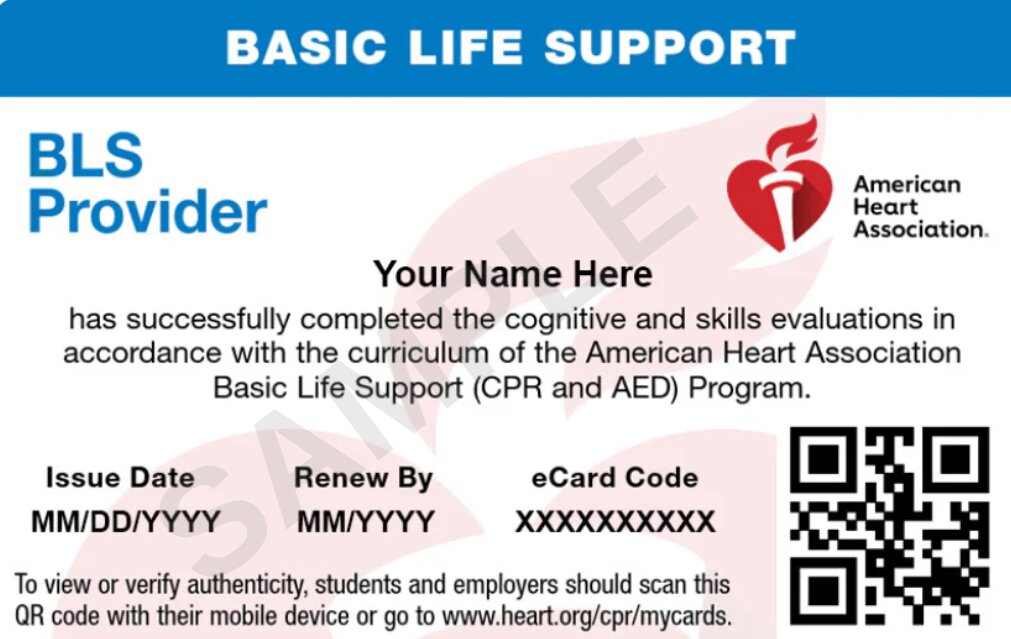
American Heart Association BLS is a Basic Life Support training program for healthcare professionals, trained first responders, healthcare students, and others who need professional-level resuscitation training. The program covers high-quality CPR, steps to use an AED, ventilation, choking response, and coordinated response for adults, children, and infants.
The AHA develops the guidelines, educational materials, and course standards for this program. Authorized Training Centers and Instructors deliver the BLS instruction through the AHA Training Network. When you register, you enroll with one of these authorized providers rather than taking the course directly from the American Heart Association.
What Is ARC BLS Certification?
American Red Cross BLS is a Basic Life Support program for healthcare clinicians and public safety professionals. The course covers CPR, AED use, airway obstruction, and emergency response for adults, children, and infants.
The organization develops its own BLS curriculum and training materials based on current resuscitation science, including ILCOR recommendations and its Healthcare Guidelines. The current program is also consistent with the 2025 AHA Guidelines for CPR and ECC. Training is available through Red Cross programs and licensed Training Providers.
AHA vs ARC BLS: What Is the Difference?
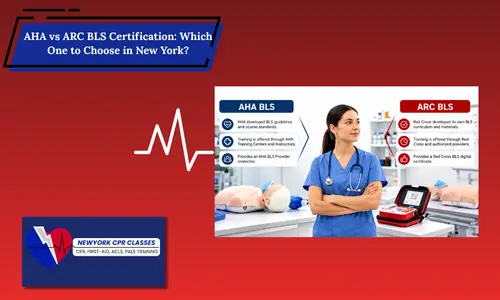
AHA and ARC BLS are separate certification programs. These certifications cover many of the same lifesaving skills, but each organization has its own course structure, educational materials, assessment methods, and certification credentials.
| Factor | AHA BLS | ARC BLS |
| Certification Provider | American Heart Association | American Red Cross |
| Program and Curriculum | AHA develops its BLS curriculum, educational materials, and course standards | Red Cross develops its own BLS curriculum and educational materials |
| Guideline Foundation | American Heart Association Guidelines for CPR and ECC | Red Cross Healthcare Guidelines and current resuscitation science, including ILCOR recommendations |
| Training Providers | Authorized AHA Training Centers and AHA Instructors | Red Cross and authorized Red Cross Training Providers |
| Who Can Take It | Healthcare professionals, trained first responders, and healthcare students | Healthcare clinicians and public safety professionals |
| Training Options | Instructor-led and blended learning | In-person and blended learning |
| Skills Training | Hands-on skills included according to the selected course format | Hands-on skills included according to the selected course format |
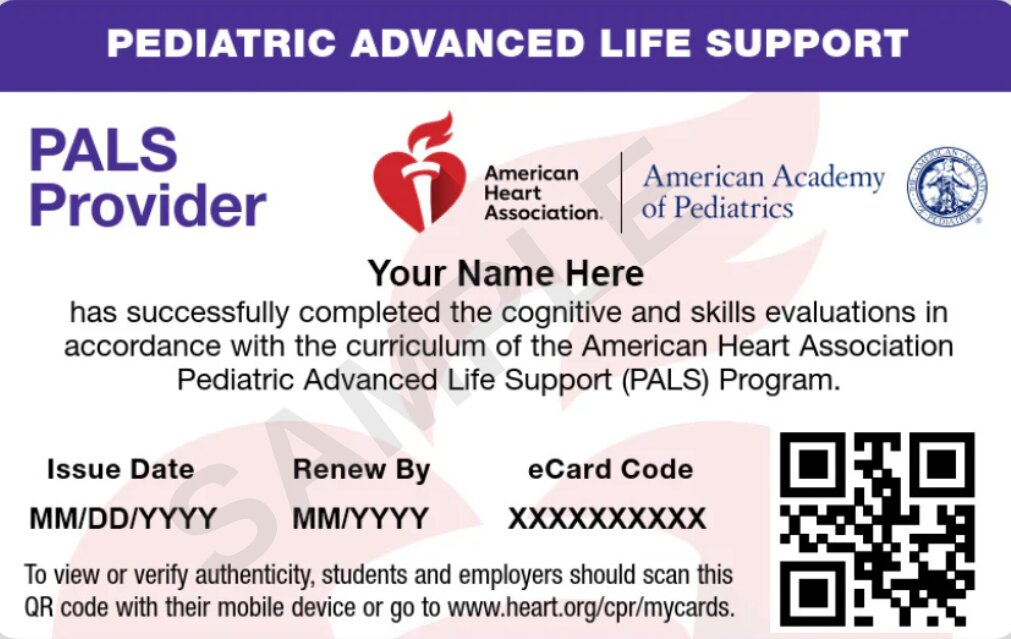
| Credential | AHA BLS Provider credential | Red Cross BLS digital certificate |
The biggest difference is not the basic lifesaving skills themselves. Both programs train professionals to respond to cardiac and breathing emergencies. The important distinction is which organization developed the program and which organization issues the credential.
For someone working in New York, the employer’s acceptance requirements may be more important than the differences between the two curricula. If a hospital, healthcare employer, school, or licensing program specifically requests AHA BLS, choose an AHA course. If the organization accepts either AHA or ARC BLS, either option may meet the requirement.
Is AHA or ARC BLS Accepted in New York?
Yes, both AHA and ARC BLS can be accepted in New York, but acceptance depends on the requirements of the employer, healthcare organization, school, or professional role.
For example, the New York State Department of Health routinely accepts AHA BLS Instructor or BLS Provider and American Red Cross CPR/AED for Professional Rescuers or Basic Life Support for New York EMS education and certification requirements. The policy also requires in-person skills verification for CPR courses covered by these EMS requirements. A course completed entirely online does not satisfy this specific requirement.
For healthcare professionals outside EMS, check your employer or organization’s BLS requirements before registering to ensure the certification you choose is accepted.
Do New York Hospitals Prefer AHA or ARC BLS?
No single statewide rule requires every New York hospital to accept the same BLS provider. Individual hospitals, healthcare systems, schools, and employers can establish their own credential requirements.
Some employers may specifically request AHA BLS, while others may accept an equivalent professional BLS certification. Before registering, check with your employer, school, or licensing organization to confirm whether they require AHA BLS, ARC BLS, or accept both certifications.
Which BLS Credentials Should You Choose in New York?
Both AHA BLS and ARC BLS provide professional-level training, but they differ in their certification provider, training experience, and credentials. Consider the following factors when deciding which option is right for you.
Choose AHA BLS Certification if:
- You are unsure which certification to choose and want a credential commonly requested by healthcare employers.
- AHA BLS is listed as a preferred certification in the jobs you are applying for.
- You need an AHA BLS Provider credential for your healthcare role.
- You prefer the AHA course structure or the available training options.
Choose ARC BLS Certification if:
- Your employer or professional role specifically recommends Red Cross BLS.
- You prefer the Red Cross approach to BLS training.
- Red Cross training is more convenient for your location or schedule.
- You need a Red Cross BLS credential for your current professional requirements.
What Should You Check Before Registering for BLS in New York?
Before paying for a course, confirm the exact credential your employer or program requires. A standard CPR course is not automatically equivalent to professional BLS certification.
Check these details:
- Course name: Confirm that the course is specifically BLS or Basic Life Support.
- Issuing organization: Verify whether your employer requires AHA, ARC, or accepts either.
- Skills requirement: Confirm that the course includes the required hands-on skills component.
- Training format: Check whether your organization accepts blended learning or requires instructor-led training.
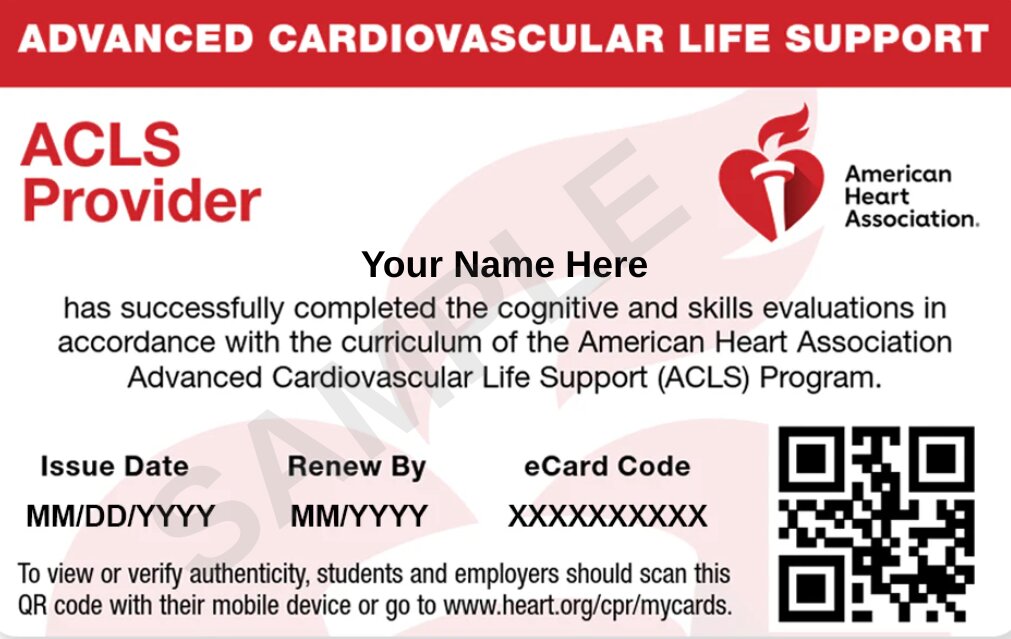
- Credential: Confirm which certification card or digital credential you will receive.
- Expiration: Check how long the credential remains valid for your particular role.
- New York requirements: If you are completing an EMS or regulated program, verify the applicable New York State requirements.
Taking a few minutes to confirm these details can help you avoid having to retake the course later.
Can You Take AHA or ARC BLS Online?
Both organizations offer blended learning options that combine online education with a hands-on skills component. Red Cross currently offers in-person and blended BLS training, while AHA also provides blended learning options through its training network.
A fully online course is different from a blended BLS course because blended training includes a hands-on skills component. Always check your employer’s requirements before selecting an online, in-person, or blended course.
How Long Are AHA and ARC BLS Credentials Valid?
After completing both parts of the course, participants receive a BLS credential that is valid for two years.
The required renewal period can differ for certain jobs or regulated settings. If your employer, licensing authority, or program requires more frequent renewal, follow those requirements rather than relying solely on the standard certification period.
Choose the Right BLS Certification for Your Career
While healthcare organizations accept both AHA and ARC BLS certifications, some employers require or prefer AHA BLS certification. Online reviews also include reports from professionals who completed ARC BLS but later had to obtain AHA BLS after their employer required it, adding time and certification costs.
New York CPR Classes offers AHA BLS, ACLS, PALS, and Heartsaver courses. Our blended learning options fit your busy schedule by allowing you to complete the online coursework at your convenience before visiting a nearby skill verification station. With multiple skill locations throughout New York, you can complete your hands-on skills session and receive your AHA BLS Provider eCard on the same day.
Frequently Asked Questions
Is American Red Cross BLS the Same as AHA BLS?
No. American Red Cross BLS and AHA BLS are different certifications. Both cover basic life support skills, but their testing requirements, passing scores, and employer acceptance can differ.
Can I switch from ARC BLS to AHA BLS?
Yes. If your employer later requires AHA BLS, you can complete an AHA BLS course even if you previously held an ARC BLS certification. You may need to complete the required training and skills session again to receive the AHA credential.
Will my employer tell me which BLS certification I need?
Many employers specify the certification they accept during hiring, onboarding, or credentialing. If the requirement is not clear, contact the organization’s human resources department, education department, or credentialing office before registering.
Are BLS and CPR Certifications the Same?
No. BLS and CPR certifications are not the same. BLS training includes CPR but covers a broader range of lifesaving skills, including AED use, ventilation, choking response, and resuscitation for adults, children, and infants. Basic CPR courses typically focus on performing CPR and using an AED during a cardiac emergency.
What happens if my BLS certification expires before my renewal course?
Once a certification expires, you may need to complete the required BLS training again rather than relying on the expired credential. The exact process can depend on the training provider and your employer’s requirements.
Should I Choose AHA BLS If I Am Unsure Which Certification My Employer Accepts?
If you are unsure which BLS certification your employer accepts, AHA BLS may be a good choice, as many healthcare organizations specifically request AHA certification. However, you should confirm the requirement with your employer, school, or credentialing department before registering, since acceptance policies can vary.